* This is the second part of a two-part installment of “Problematica.” In Part 1, I asked how “uniformitarianism” became associated with a view that had not originally been regarded as distinctly uniformitarian— the view that nature’s law are stable in space and time. This meaning-shift happened during the twentieth century, I claimed. But why did it happen at all, and beyond that, why did it happen when it did? Problematica is written by Max Dresow…
It is time to answer the focal question: how did uniformitarianism come to be widely understood as a claim about the spatiotemporal invariability of the laws of nature? The answer will involve the construction of what I have previously termed the “Lyell myth,” or at least a version of it. But before coming to this, let me briefly remind you of what I argued at the end of Part I. There I stated that
there was no uniformitarian stranglehold on geology during the second half of the nineteenth or the first half of the twentieth century, especially outside of Britain. In the United States and continental Europe, uniformitarianism was a minority position, and Lyell a figure of modest importance, easily eclipsed by [James] Hutton in the mythology of the discipline.
By the middle of the twentieth century, however, the fortunes of uniformitarianism had reversed, and dramatically so. Lyell was the chief beneficiary, “the kingmaker whose giant progeny” had made the modern disciplines of geology and evolutionary biology (Eiseley 1959, 106). His basic accomplishment was to have banished Moses from the sciences:
Until Lyell published his book, most thinking people accepted the idea that the earth was young, and that even its most spectacular features such as mountains and valley, islands and continents were products of sudden, cataclysmic events, which included supernatural acts of God. (Rensberger 1986, 236)
Basically, Lyell set geology on its modern scientific feet, destroying biblical literalism while at the same time providing the basic framework for Darwin’s world-shaking revolution. This was the Lyell myth in its most heroic, indeed garish, colors.
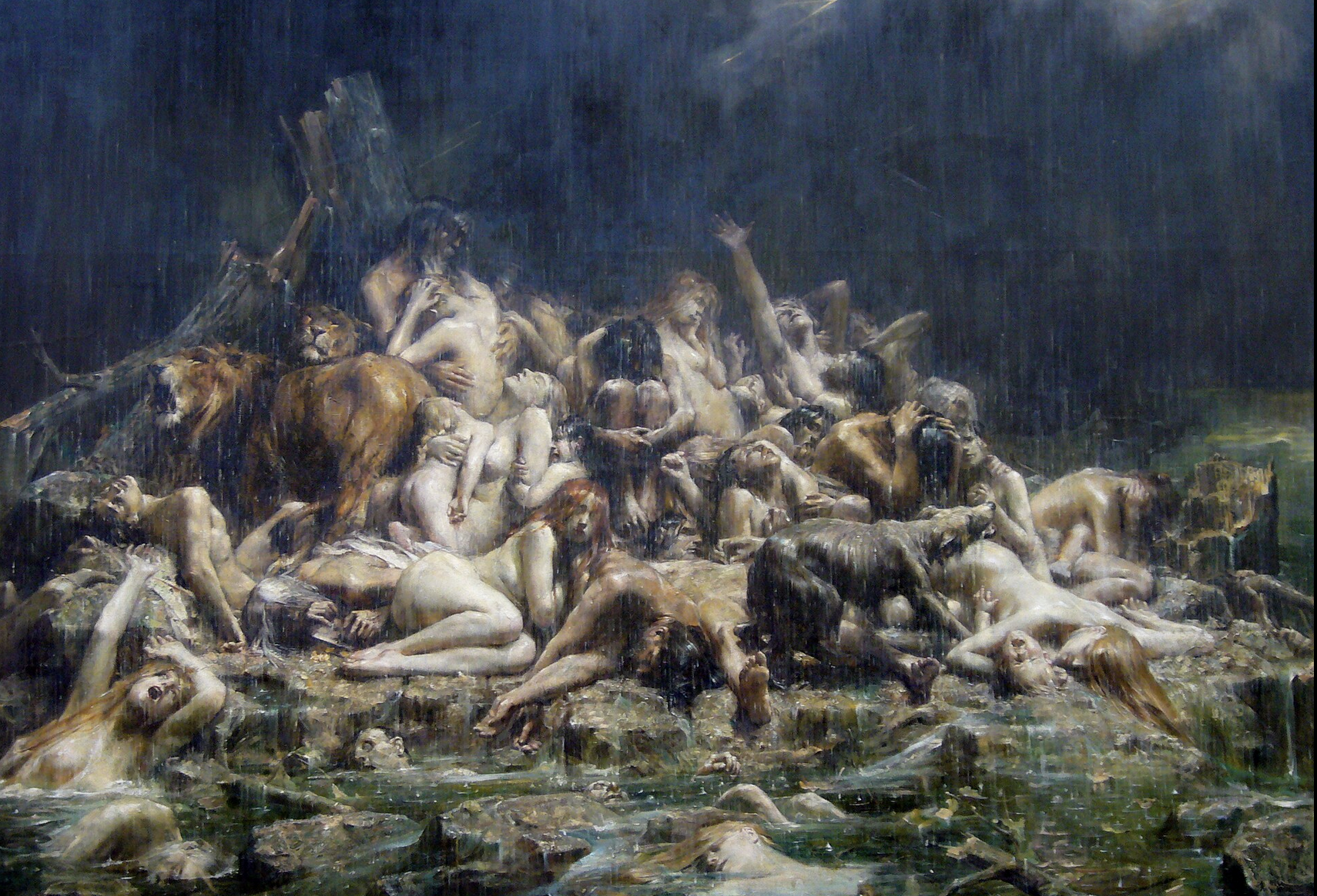
“The Flood of Noah and Companions” by Léon Comerre
The Lyell myth, as I characterize it, is not just about Chas. Lyell. Instead, it is an origin story for geology, which treats Lyell as Alexander to Hutton’s Philip of Macedon. Here is how I described it in an earlier post:
Once upon a time, superstition and credulity reigned. This was the late eighteenth century, the heyday of scientific “catastrophism” (a word William Whewell coined to contrast with “uniformitarianism”). The philosophy of catastrophism “was frankly supernatural” (Eiseley 1958, 114). “The world was not regarded as [having] always [been] shaped by the forces of today.” Instead, it was said to have been repeatedly convulsed by paroxysms of divine authorship: these are the “catastrophes” of its name. After each catastrophe, new forms of life were created to repopulate the globe. So mammals replaced the great secondary reptiles, and man the stranger elements of the tertiary fauna. The whole pageant had an air of mystery to it, as if the rule of law had been miraculously suspended at different points in the history of the planet. Anyway, geologists had yet to learn Hume’s lesson that the evidence for miracles never outweighs the evidence against them. “I should not believe such a story were it told me by Cato”— this was a sentiment on no one’s lips, at least until Hume’s friend, the Edinburgh geologist James Hutton, came around.
Hutton was a light in the predawn of geology, a prophet of natural law. But his candle was almost snuffed out before Charles Lyell blew it into a conflagration. With Lyell, geology finally became a science. “A generation before Darwin he took a world of cataclysms, supernatural violence, and mystery, and made of it something plain, expected, and natural” (Eiseley 1959, 98). Through him, the rule of law at length overthrew the caprice of divine meddling. “If today we look upon our planet as familiar even when its bowels shake and its volcanoes grumble, it is because Lyell taught us long ago the simple powers in the earth” (Eiseley 1959, 98). Slow, steady, simple: after Lyell, uniformitarianism was the order of the day. Even the validation of continental drift played by its rules, since this had to wait until a vera causa of continental movement had been discovered in seafloor spreading.
Of course, none of this is original. Stephen Jay Gould drew the same picture in Time’s Arrow, Time’s Cycle, where he credited Lyell with fabricating the template of his own “cardboard” icon. Still, what Gould seems to have missed was the extent to which Lyell’s reputation suffered in the last part of the nineteenth and the first part of the twentieth century. It wasn’t that he was discredited. A 1914 remembrance of Eduard Suess described Das Antlitz der Erde as “the greatest work upon geology since the modern science was founded three-quarters of a century ago… by Sir Charles Lyell” (Hobbes 1914, 811). It was rather that turn-of-the-century geologists tended to regard Lyell “as an important, but not as a pivotal figure [in the history of field]”— the equal of Murchison, Sedgwick, and Élie de Beaumont (Bartholomew 1979, 276). Those interested in naming a “father” of geology usually opted for Lyell’s predecessor, Hutton, including the geologist-historian Archibald Geikie:
Hutton started with the grand conception that the past history of our globe must be explained by what can be seen to be happening now, or to have happened only recently. The dominant idea in his philosophy is that the present is the key to the past. We have grown so familiar with this idea, it enters so intimately into all our conceptions in regard to geological questions, that we do not readily realise the genius of the man who first grasped it with unerring insight, and made it the corner-stone of modern geology. (Geikie 1897, 167–168)
Lyell, by contrast, was someone who assiduously developed “the Huttonian theory… until the original enunciator… was nearly lost sight of” (Geikie 1897, 404). “He carried Hutton’s doctrine to its logical conclusion,” becoming in time “the great high priest of Uniformitarianism— a creed which grew to be almost universal in England during his life, but which never made much way in the rest of Europe, and which in its extreme [Lyellian] form is probably now held by few geologists in any country” (404–405).
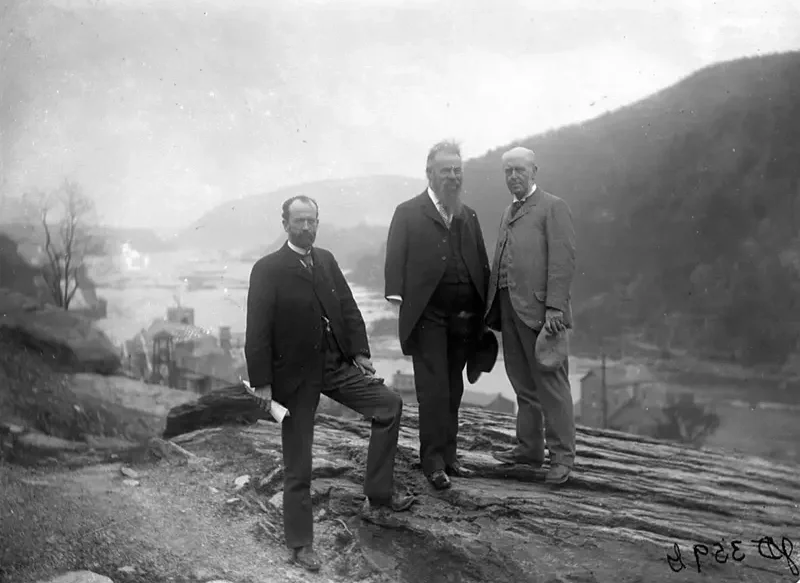
Archibald Geikie, right, standing with two American geological icons: Charles Doolittle Walcott, left, and John Wesley Powell, center, at Harper’s Ferry, Virginia (1897)
Six decades separated this relatively muted appraisal from Eiseley’s hymn. For Geikie, “Lyell’s function was mainly that of a critic and exponent of the researches of his contemporaries, and of a philosophical writer thereon” (282). For Eiseley, Lyell was the very founder of geology. The difference is striking, and representative of a broader shift in attitude. So— what happened?
A “Back to Lyell” Movement
In answering this question, there are two things to keep track of: the practice of geology, on the one hand, and the writing of its history on the other. I will spend most of my time talking about the second thing; but before I do, it is necessary to say a few words about the resurgence of uniformitarian ideas within geology itself.
As I have repeatedly stressed, uniformitarian ideas were nowhere in power in American geology during the first decades of the twentieth century. The fact that they had become orthodox by the 1960s suggests that a “back to Lyell” movement took place sometime after 1940 (presumably); and as it happens, there is some evidence that such a movement really happened.
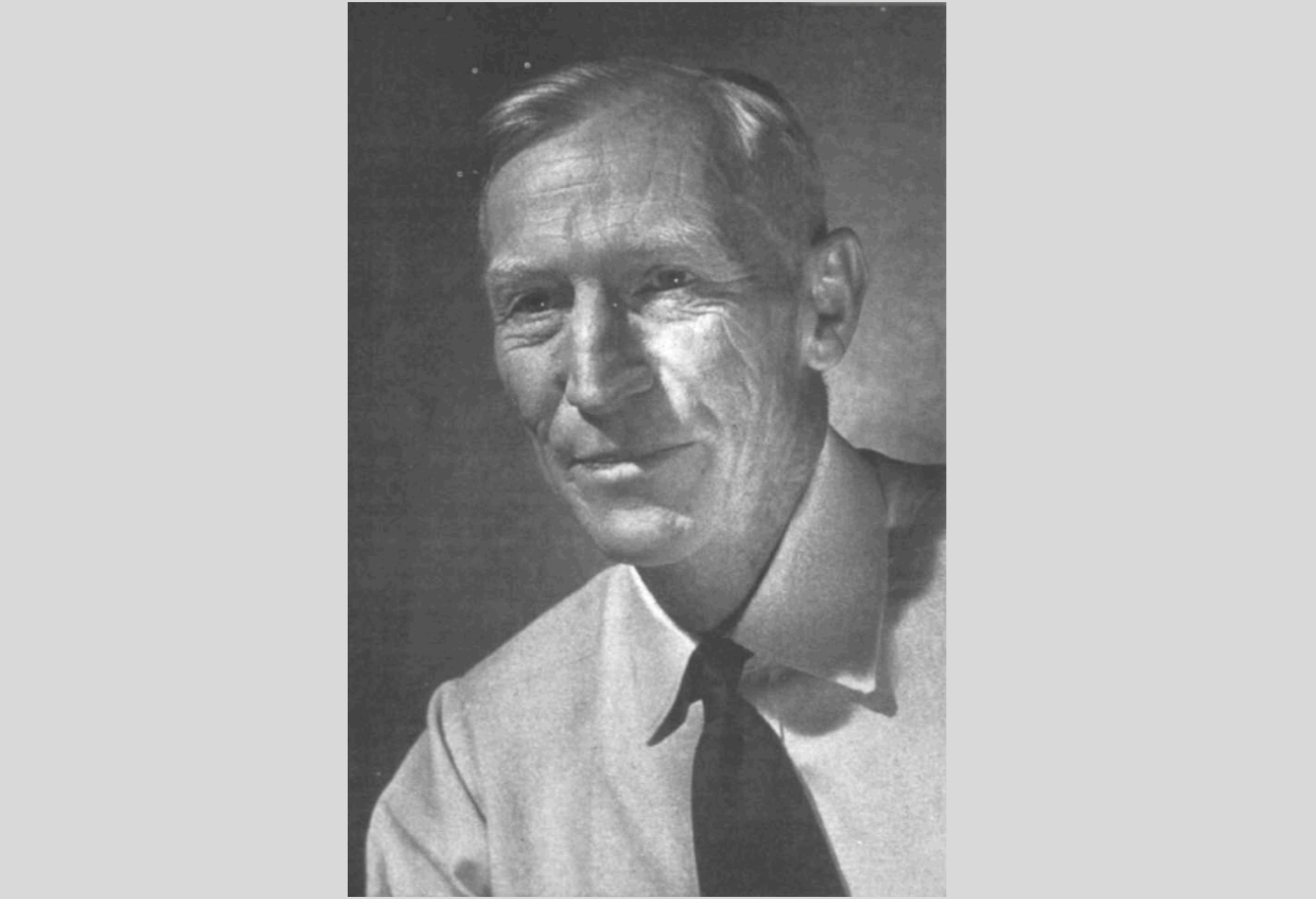
James Gilluly, looking every bit the “dean of American field geologists”
The best bit of evidence of comes from a 1948 presidential address to the Geological Society of America, delivered by the structural geologist James Gilluly.* It was a broadside against the theory of periodic diastrophism, and especially against the idea that the history of the earth “has been punctuated by geologically very short orogenic epochs [or pulses of mountain-building]” (Gilluly 1949, 561). At the time the “theory of periodicity, with its corollary of increasing tempo [of orogeny over] time,” seemed “clearly dominant” (562). This matched Lloyd Henbest’s contemporaneous claim that the diastrophic theory was then the “prevailing idea” in historical geology (Henbest 1952, 299). And yet, for Gilluly, the whole business was mostly hot air. “I am not ready to assert that orogeny is actually continuous,” he declared, “but I do believe that none of the arguments yet advanced in favor of periodicity is strong, most are very weak, and some, indeed, amount to prejudgements” (Gilluly 1949, 562).
[* A long-time employee of the United States Geological Survey, and in 1949, a professor at UCLA, Gilluly was known “for his towering mentality, biting wit, fiery temperament, [and] colorful vocabulary.” Others described him as the “dean of American field geologists,” indicating a rare union of field chops and synthetic ability.]
Gilluly did not conceal his own prejudices, at one point calling himself “a loyal Huttonian” who believed that “the present is the key to the past” (Gilluly 1949, 565). Still, he was even-handed when it came to weighing up the evidence for and against periodicity. The orogenic provinces of southern California, Gilluly’s stomping grounds, showed no signs of periodic disturbance, and instead seemed to indicate “repeated or continuous uplift”— just as Hutton might have predicted (571). Other arguments in favor of periodicity evaporated when due consideration was paid to the incompleteness of the sedimentary record. Apparently neutral classificatory practices sometimes exaggerated the appearance of periodicity; in particular, the dates assigned to unconformities, or gaps in the record, tend to be “systematically displaced in the direction of the stage boundaries,” in accord with the predictions of the diastrophic theory (585). Taking it all together, Gilluly found no grounds for believing that mountain-building occurred in globally synchronous pulses. He concluded by stating his belief that
we should, as geologists… not assume changes in actualistic [uniformitarian] geology until these are compelled by observations. It is my belief that these changes are not yet required by the evidence at hand. Long live Lyell and his doctrine of uniformitarianism! (Gilluly 1949, 589, emphasis added)
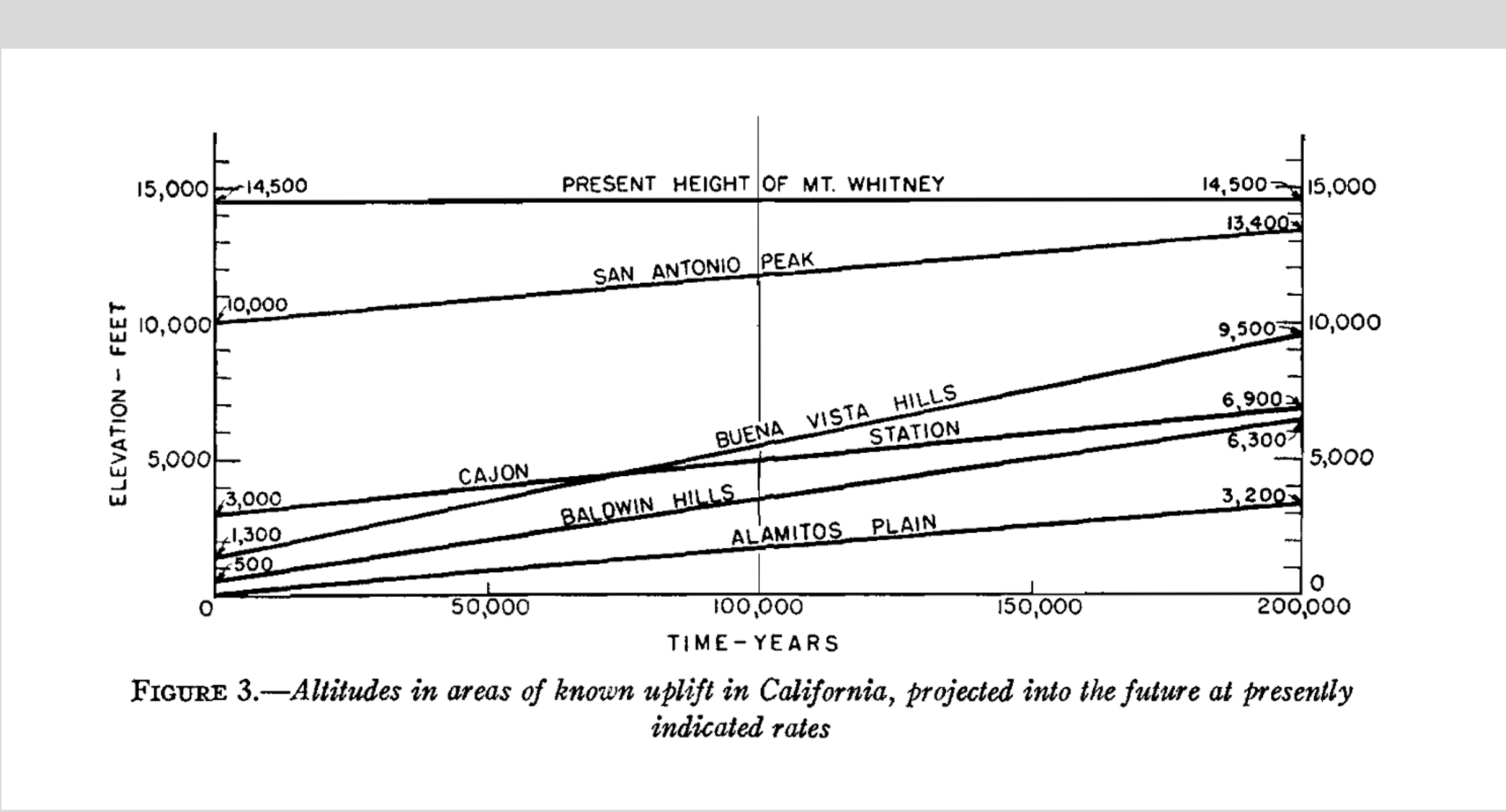
A graphic showing the present height of some geographic features in California, with measured rates of uplift extrapolated into the distant future
Of course, one presidential address does not constitute a movement, but Gilluly’s address did not stand alone. In 1949, the same year Gilluly’s address appeared in print, a symposium on the diastrophic theory appeared on the program of the Geological Society of America’s annual meeting. Jointly sponsored by the Paleontological Society, the Society for Vertebrate Paleontology, and the Geological Society of America, it came down hard on diastrophic periodicity, and especially on the idea that major episodes of evolutionary activity should coincide with pulses of mountain-building. George Simpson, earlier a tepid supporter of the diastrophic theory, came out against it, and likewise his colleague at the American Museum, Norman Newell (Simpson 1952; Newell 1952). It was not a killing-blow, but as the twentieth century reached its half-way point, the diastrophic theory was on life-support.
The beneficiary of all this, it seems, was “uniformitarianism,” here understood as an intellectual framework that had no room for “episodes of storm and revolution” (Gilluly 1949, 561). At least in the United States, the fall of diastrophism provided the break “Huttonians” had been waiting for, and they rushed to fill the theoretical vacuum. Lyell’s fortunes were improving. No longer a distant “philosophical writer,” he was now looked upon, improbably, as a forerunner of modern tectonic theory, with useful things to say about the pace and distribution of mountain-building. But it was not enough to usher him into power. For that something else was required— the birth of the “Lyell myth.”
Making A myth
The origin of the Lyell myth cannot be precisely dated. Perhaps, as Gould has suggested, it began with Lyell himself; perhaps it flickered to life in the twentieth century, in a pocket of enthusiasm for the high priest of uniformitarianism. Whatever the case, if it is hard to say when the Lyell myth was born, it is easy to say when it exploded— in 1958, the year before the centenary celebration of Darwin’s Origin of Species. This was a centenary, too, of the “brief sketch” of Darwin’s theory presented to the Linnean Society (along with a short essay written by Alfred Russel Wallace). To commemorate the occasion, a genre of centennial publications began to materialize, many of them historical in orientation. One of the first was also the best: Darwin’s Century, a remarkable work of semi-popular history written by the anthropologist and nonfiction virtuoso Loren Eiseley.
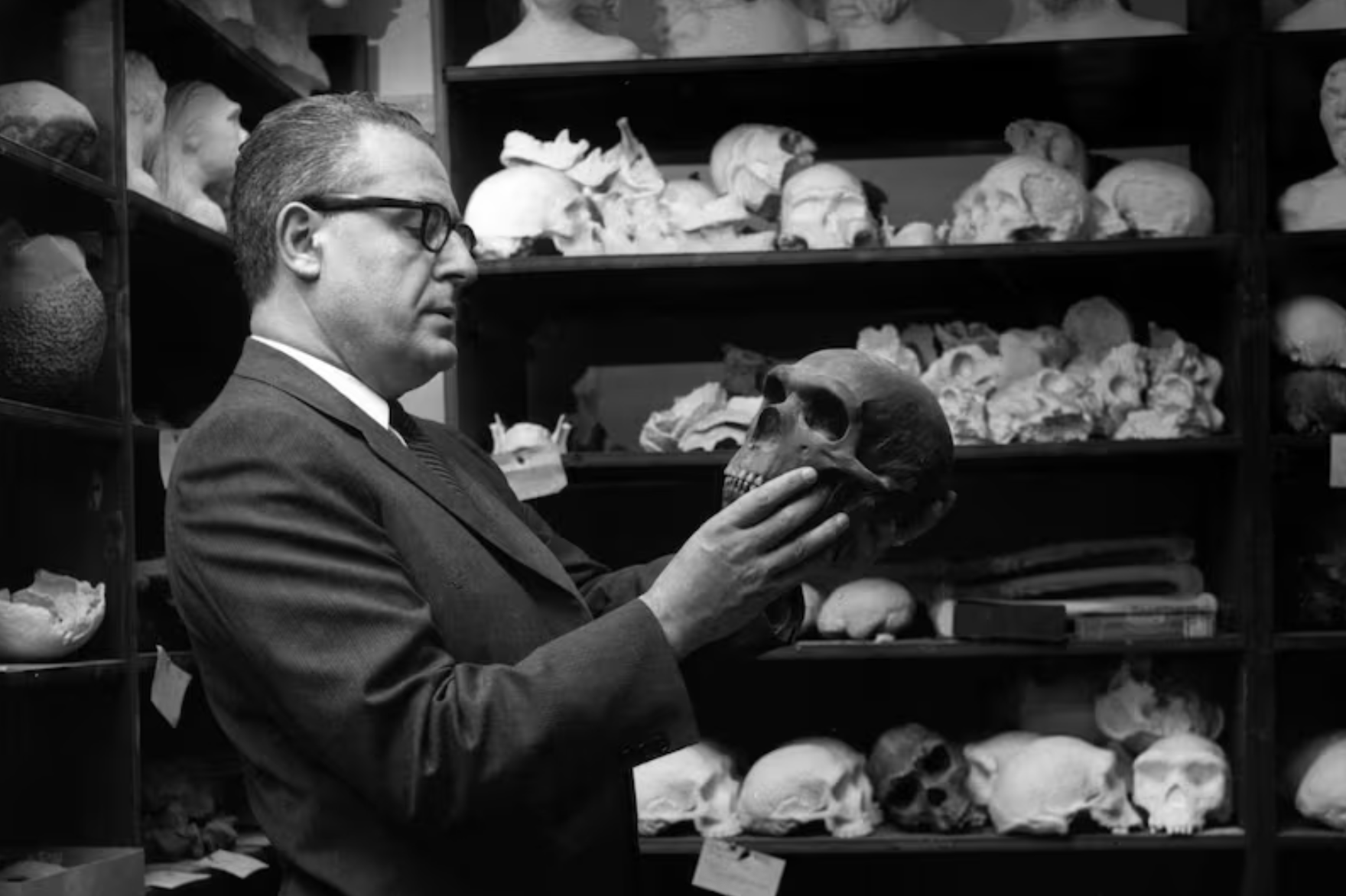
Loren Eiseley
The book began with a characteristically Eiseley-an passage, which established the scope of the project:
It has been remarked by historians that the discovery of the world by the great voyagers, and particularly their passage across the western seas, had made a tremendous impact upon the thought of Europe in the sixteenth and seventeenth centuries… This broadening intellectual experience was shared by all western Europeans and it aided tremendously in ushering in the dawning age of science. As an indirect consequence of this adventure, the theory of evolution, vast in its implications as a new continent, was really, in essence, glimpsed through the fogs and sea wrack penetrated by mariners. Moreover, and most appropriately, it was to be a voyager-naturalist, Charles Darwin, later on in the nineteenth century, who would finally establish its reality. (Eiseley 1958, 1)
Like the “fabulous western isles,” Eiseley continued, “the idea would be coasted at first through dangerous intellectual waters. It would be termed a phantom, a figment of man’s restless imagination… like a sea monster, ‘blasphemous,’ ‘illusory’ and ‘godless.’ Finally, it would lie there under the lifting fog wisps which had so long obscured human vision, a country of wraiths and changelings among whom was to be counted man himself.” — Loren Eiseley was a writer. But amid the bravura prose he was sketching the plan of an argument, a history of evolution both optimistic and adversarial. Eiseley planned to tell the story of evolution as a triumph of the human intellect, and one with a long history preceding Darwin. Yet he also planned to tell it as a story of opposition, danger, and compromise; a story of the intellect struggling against ancient prejudice and ingrained practice. Which brings us to Charles Lyell.
Eiseley’s treatment of the geological debates of the nineteenth century was not so different from Lyell’s own. It was a heroes and villains account, in which no hero stood taller than Sir Charles; indeed, Eiseley depicted Lyell as groping towards Darwin’s position, and nearly getting there— only a Linnean hangover prevented him from writing the Origin. Near-glories aside, Lyell “won in the geological field a victory similar to the one that Darwin was later to achieve in biology,” Eiseley states (99). He did this by routing the catastrophists, a “frankly supernatural” school of thought that represented “a compromise between the Mosaic account of creation and the increasing geological knowledge of the late eighteenth and early nineteenth century” (114, 353). The catastrophists were not just supernaturalists, they were teleologists, too— “Life [to the catastrophist] is prophetic from its first appearance and points to man” (114). So Lyell battled them. In Eiseley’s telling, “The uniformitarian school [was] essentially a revolt against the Christian conception of time as limited and containing historic direction, with supernatural intervention constantly immanent.” In place of this picture, the uniformitarians would substitute “the idea of the Newtonian machine, self-sustaining and forever operating on the same principles”— a picture that, with modification, would become “the geological philosophy of the twentieth century.” (Lyell’s own teleological statements— which are sometimes as quaint as those of contemporary natural theologians— are here conveniently suppressed.)
While I disagree with aspects of Eiseley’s historical analysis, his writing is breathtaking. This is how he introduces his discussion of uniformitarianism and catastrophism:
A bone, to Cuvier, was never just a bone, because it told, in its curvatures and varied processes, the story of an organized being whose every other bone and organ could be expected to be in harmonious proportion and accord with the solitary fragment. Thus, within a certain degree, a claw should ordinarily disclose a particular type of tooth, or a tooth the necessary nature of the shoulder blade. A landscape, to James Hutton, was not a given thing, shaped once and forgotten, but rather a page from a continuing biography of the planet. The scene had been written by frost and a light wind that blew for ages, by the hidden touch of subterranean fires, by a plant that grew and held a little patch of soil from being carried away by a stream. (Eiseley 1958, 91–92)
These sentences are lovely, and only slightly undone by the ones that follow: “Whatever else it was also, this landscape was natural. It had not been wrought by convulsive or mythical events, or by the hand of a wrathful Divinity.”
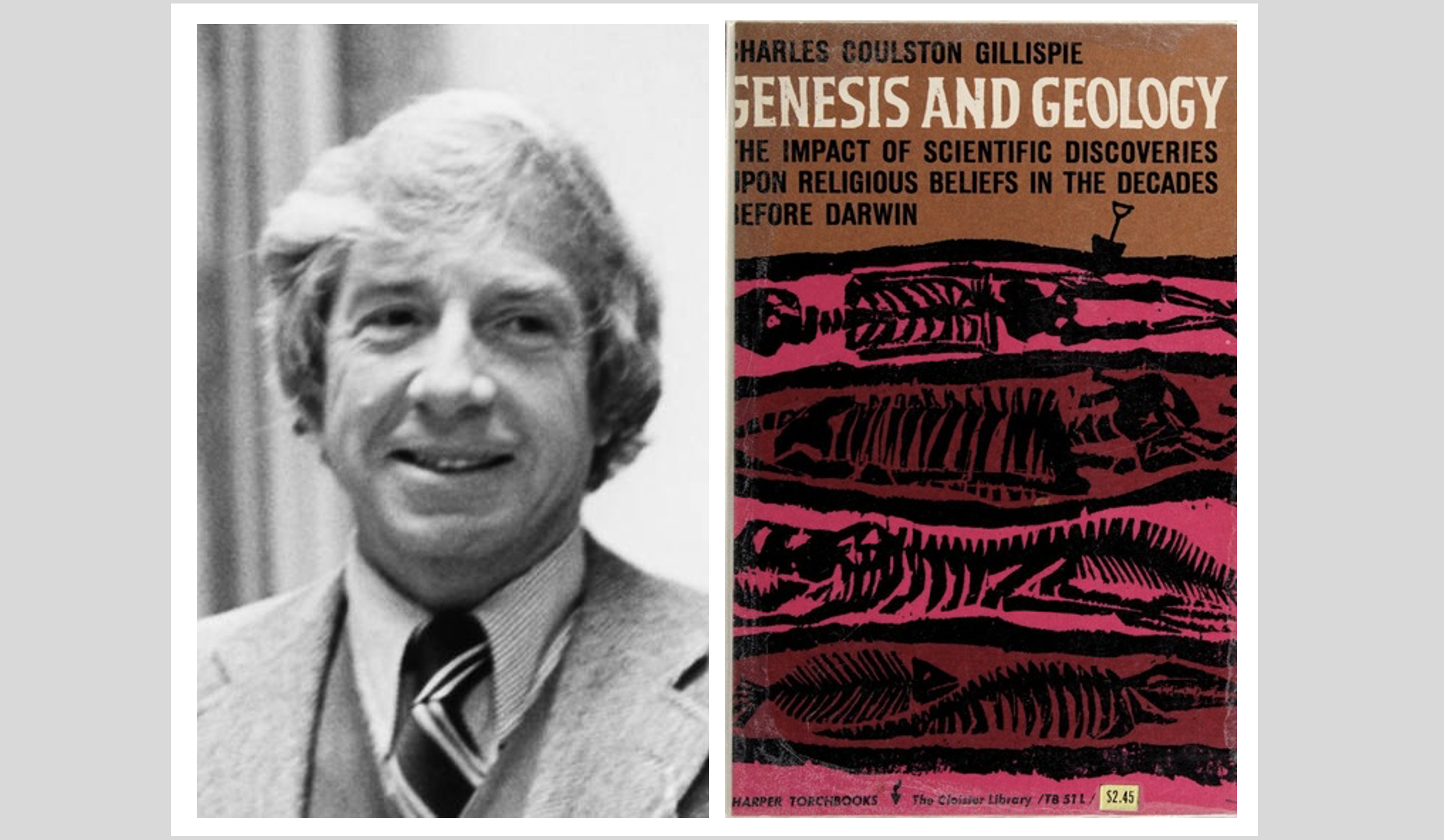
Charles Gillispie and the 1959 paperback edition of Genesis and Geology. It seems that Eiseley read Genesis and Geology before writing Darwin’s Century; he cited the book once, although not in the chapter on uniformitarianism and catastrophism. This, however, does not exclude the possibility that Eiseley’s understanding of the “uniformitarian-catastrophist debate” was shaped by Gillispie’s analysis— my hunch is that it was, to a considerable degree
If one had to choose a single document as the source of modern Lyell myth, the choice would be between Darwin’s Century and Eiseley’s short article, “Charles Lyell,” published the next year in Scientific American. But Eiseley did not build the Lyell myth alone. Another contributor was Charles Gillispie, a longtime historian at Princeton University, whose 1951 book Genesis and Geology likely influenced Eiseley’s account. Like Eiseley, Gillispie came to geology from an interest in evolution, and “presented his study as a prehistory to Darwin's Origin of Species, covering the period 1790–1850” (Rupke 1994, 262). Also like Eiseley, he devoted a good deal of attention to uniformitarian-catastrophist debate, depicting this as a struggle between positive science and superstition. As Michael Bartholomew explains,
[Gillispie’s] thesis is that Lyell’s Principles polarized British geologists into two sharply defined schools. He argues that British geology in the 1820s was characterized by supernaturalism, a frank and deeply felt providentialism, and sometimes, a strained biblical literalism. Then, the thesis runs, in 1830, Lyell’s Principles annihilated biblical literalism, set geology on its modern scientific feet, and, with scarcely a hitch, led straight on to Darwin, at whose side Lyell quickly ranged himself. (Bartholomew 1979, 277)
All of this was rather crude, Bartholomew observes. “By presenting the period largely in terms of conflict, [Gillispie] may have succeeded in bringing out some of the more obvious contrasts between Lyell’s work and, let us say, [William] Buckland’s, but in the process, he overlooked the traditional, providential elements in Lyell’s work, failed to appreciate the significance of Lyell’s [non-progressive] interpretation of life-history, falsely charged Lyell’s opponents with a ‘puerile and unscientific’ approach to their work, and overestimated the extent of Lyell’s approval of Darwin’s theory.” But never mind this. The thing to see is how Gillispie’s Lyell cut the figure of a scientific hero, who reclaimed for “materialistic” science “more and more of the phenomena which an ignorant past had attributed to miracles, to demons, to divine interventions, or to other extraordinary agencies” (Gillispie 1951, 135). This is Lyell in modern mythological colors— the prophet of a law-bound cosmos, hostile to all manner of supernatural fluff.*
[* Gillispie’s book seems to have had a small impact when it first appeared, befitting its status as a spruced up PhD thesis. Yet its popularity spiked in 1959 when it was granted a Harper Torchbook paperback edition (Rupke 1994). It could therefore draft on the popularity of Eiseley’s book, which was also reissued in an affordable paperback edition, in 1961.]
With Lyell thus reconstructed as a hero of Newtonian science— as an advocate of a materialistic system in which all happenings were determined by unvarying laws— the stage was set for an update of “uniformitarianism.” To speak now of “the doctrine of Hutton and of Lyell” would have seemed hopelessly old-fashioned. Little of the “doctrine” survived into the 1960s. And anyway, Lyell’s principal contribution was not to advance a doctrine— it was to infuse geology with the scientific method, and so eradicate the supernatural elements that had prevented earlier investigators from arriving at sound views of the earth and its history. Certainly this was how Gould saw things in his 1965 paper on uniformitarianism. It began:
Limited in their interpretation of nature by the rigid exigencies of the Mosaic chronology, nineteenth century catastrophists postulated a succession of great upheavals culminating in a “general flood which swept away the quadrupeds from the continents, tore up the solid strata, and reduced the surface to a state of ruin.” Their worldview extended beyond a simple theory of geologic change; it encompassed a methodological procedure, excluded from the modern definition of science, which permitted a direct providential control of earth history. (Gould 1965, 223)
At which point Gould cited Gillispie (1959, 98), who claimed that both Buckland and Whewell approved of a view in which the laws of nature were occasionally suspended to suit the purposes of a providential God. By contrast, uniformitarians “affirmed [that] geology needed not only an empirical theory unencumbered by Biblical preconception, but also a methodology which affirmed the potential natural explanation of terrestrial development and relegated intrinsic mystery to its proper theological realm.” They thus “asserted the invariability of natural laws in space and time as a necessary condition to [the] contention that reference need only be made to observable processes in explaining past changes.” “The main force of this proposition,” Gould went on, “was to eliminate supernatural explanations of material phenomena; for this uniformity denies divine intervention (the suspension of natural laws) and affirms that the elucidation of earth history belongs to the domain of science, not, as Buckland might have preferred, to quasi-theological inquiry suited more for proving God's grace than understanding natural processes” (224). All of which was straight out of the revisionist histories of Eiseley and Gillispie, and doubtless would have shocked Buckland, who was as interested in framing scientific explanations as anyone, including Sir Charles.*
[* Gould later changed his characterization of scientists like Buckland, writing, for example, that “the catastrophists of Lyell’s day were fine scientists, not the miracle-mongers that Lyell described in his rhetoric” (Gould 1987, 129).]

John Martin’s mezzotint etching of 1828, depicting the Biblical deluge
I’m not saying that Gould was patient zero for the view that uniformitarianism was a claim about laws. As I said before, law talk was always part of the uniformitarian package, even if it was rarely seen as the most important thing in that package. Certainly there were those before Gould who emphasized laws; Bullard (1944) is one example. No, what I want to argue is that the emergence of the Lyle myth created an ecological niche in which Gould's understanding of “[methodological] uniformitarianism” could flourish. Prior to the creation of this niche, there was little reason to think about uniformitarianism as a claim about laws— after all, everyone agreed that the laws of nature were stable, and that catastrophes, if they happened, played by their rules. It was only when an unhistorical view of Lyell’s opponents emerged as part of a morality play about science and supernaturalism that the law view took hold, presumably during the 1960s. Notably, the year 1965 was also when Arthur Holmes defined “actualism” (his term for methodological uniformitarianism) as “the principle that the same processes and natural laws prevailed in the past as those we can now observe or infer from observations” (Holmes 1965, 44). Earlier editions of his textbook, Principles of Physical Geology, contained no such statement.
The idea spread. Soon, uniformitarianism came to mean the view that nature’s law are stable in space and time— to many people, anyway, including the authors of influential textbooks. Quite naturally, others began to ask what all the fuss was about. Do we really need a term like “uniformitarianism” to designate a position that every card carrying scientist holds? And if we do need such a term, must it be a nine-syllable monstrosity with a geological provenance? Gould recommended cutting bait: “The term today is an anachronism, for we need no longer take special pains to affirm the scientific nature of our discipline” (Gould 1965, 227). Nelson Goodman too: “he (the geologist) can now forget the obsolete controversy over uniformitarianism and cease defending himself for practicing what he fears may be not quite a science” (Goodman 1967, 99).
Certainly no one should use the term “uniformitarianism” to mean the view that nature’s laws are stable in space and time. Whether it should be dropped from the geological lexicon, however, is a separate matter, and none of our business here. For now it will suffice to say that, as interpreters of scientific language, Gould and Goodman missed the mark.
* * *
I have tested your patience enough, so let me conclude succinctly. The term “uniformitarianism” has had a complicated history, thoroughly entangled with the historiography of geology. There is more to say about this— I, for one, am skeptical of the notion that there was any such thing as the “uniformitarian-catastrophist debate,” as indeed others have been (e.g., Bartholomew 1979). Yet I’ve been concerned here to establish just a few points, namely:
Lyellian geology did not score a complete and lasting victory against its opponents during the nineteenth century. Instead, its victory was partial, local and temporary; in much of the world, by the beginning of the twentieth century, “uniformitarianism” was in eclipse;
In America, the decline of the theory of periodic diastrophism provided an opening for a “back to Lyell” movement of uncertain strength (although probably quite strong, especially in the 1950s and ‘60s). To be clear, this was a movement within geology, and was perhaps most popular among structural geologists;
The “Lyell myth,” although in some respects prefigured by Lyell’s rhetoric in the Principles, was a mid-twentieth century invention, chiefly crafted by historical writers like Eiseley and Gillispie. Among other things, it occasioned a new understanding of “uniformitarianism” as the idea that nature’s laws are stable in space and time, although it remains unclear exactly how this meaning was consolidated, and who was responsible.
But enough of this! To close, a prediction— will this be the last thing I write about Charles Lyell? Probably not.
References
Bartholomew, M. 1979. The singularity of Lyell. History of Science 17:276–292.
Bullard, E. C. 1944. Geologic time. Manchester Literary and Philosophical Society 86:55–82.
Eiseley, L. 1958. Darwin’s Century: Evolution and the Men who Discovered it. New York: Doubleday.
Eiseley, L. 1959. Charles Lyell. Scientific American 201:98–109.
Geikie, A. 1897. The Founders of Geology. London: Macmillan & Co.
Gillispie, C. C. 1959. Genesis and Geology: A study in the relations of scientific thought, natural theology, and social opinion in Great Britain, 1790-1850. New York: Harper and Row.
Gilluly, J. 1949. Distribution of mountain-building in geologic time. GSA Bulletin 60:561–590.
Goodman, N. 1967. Uniformity and simplicity. In C. C. Albritton, ed., Uniformity and Simplicity: A Symposium on the Principle of the Uniformity of Nature, 92–99. Geological Society of America (Special Paper 89).
Gould, S. J. 1965 Is uniformitarianism necessary? American Journal of Science 263:223–228.
Gould, S. J. 1987. Time’s Arrow, Time’s Cycle: Myth and Metaphor in the Discovery of Deep Time. Cambridge, MA: Harvard University Press.
Henbest, L. G. 1952. Significance of evolutionary explosions for diastrophic division of earth history— introduction to the symposium. Journal of Paleontology 26:299–318.
Hobbes, W. H. 1914. Eduard Suess. Journal of Geology 22:811–817.
Holmes, A. 1965. Principles of Physical Geology. London: Thomas Nelson and Sons, Ltd.
Newell, N. 1952. Periodicity in invertebrate evolution. Journal of Paleontology 26:371–385.
Rensberger, B. 1986. How the World Works. New York: William Morrow.
Rupke, N. 1994. C. C. Gillispie’s Genesis and Geology. Isis 85:261–270.
Simpson, G. G. 1952. Periodicity in vertebrate evolution. Journal of Paleontology 26:359–370.