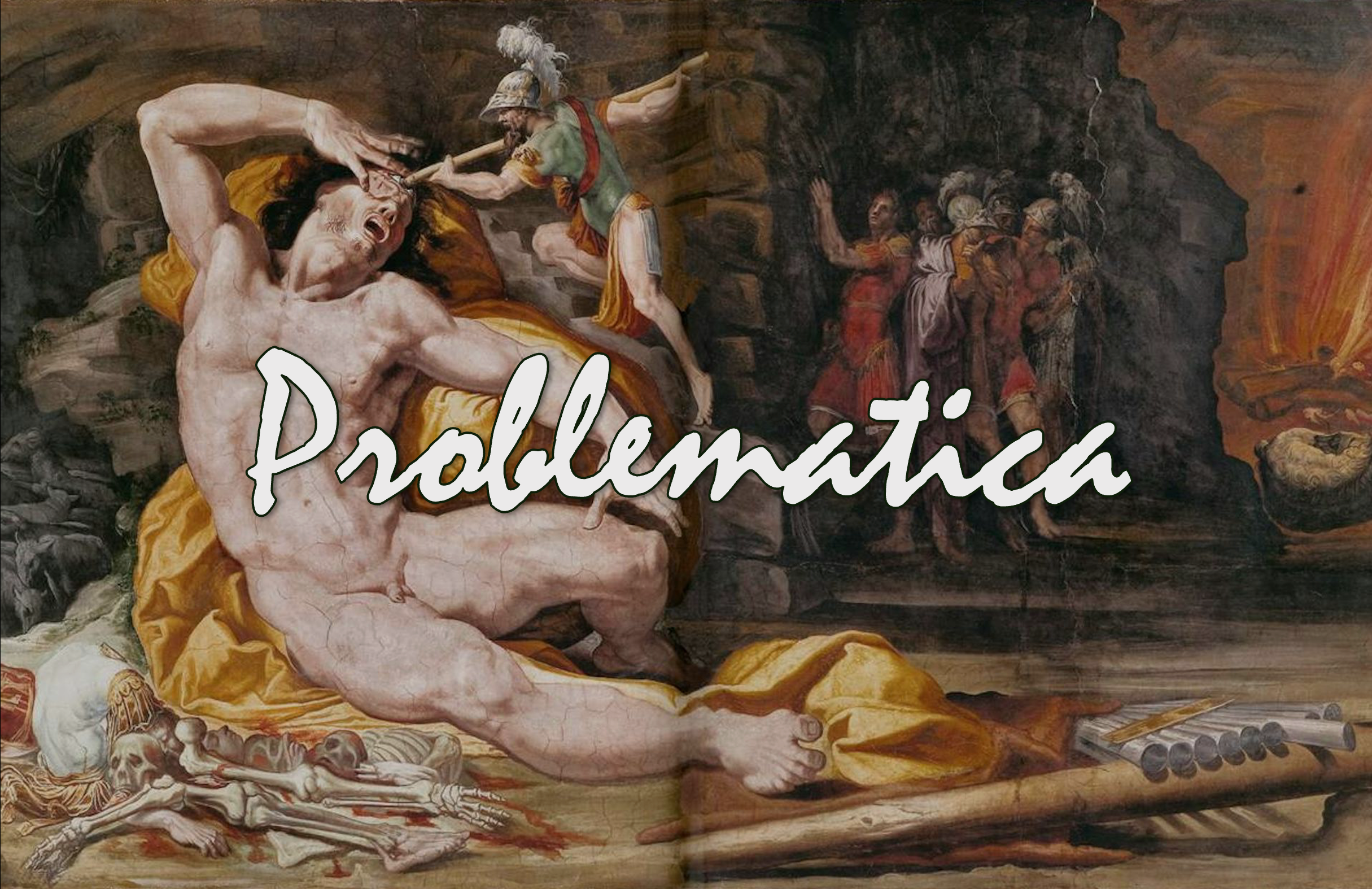
* This is the forty-fifth installment of my essay series “Problematica.” Once again, it’s about Charles Lyell and uniformitarianism, with guest appearances from Steve Gould, T. C. Chamberlin and Eduard Suess. Because it’s a bit long, I’ve split it into two parts. Part 1 introduces the question I intend to answer: how did “uniformitarianism” become associated during the twentieth century with a view that earlier generations did not regard as distinctly uniformitarian? It also summarizes some evidence bearing on the “eclipse” of Lyellian geology during the period following Lyell’s death— something that deserves to be more widely known than it is. Then, in Part 2, I will describe the “back to Lyell” movement that started to churn in the 1940s, and explain how that drove the meaning-shift at the center of the essay. Problematica is written by Max Dresow…
Lately I’ve had uniformitarianism on the brain.
[—Yeah, no kidding, you say. This blog, which used to host an entertaining mix of content, is now just a series of digressions on uniformitarianism and a bunch of other sh-t nobody cares about. Four posts on periodic diastrophism— are you trolling us with this stuff? Which, okay— fair. But I need to insist that any imaginary people who interject during this post show a bit of restraint.]
Anyway, the reason I’ve had uniformitarianism on the brain is that I’ve been writing about it for something called Comprehensive Philosophy of Science. I took the assignment on the expectation that I would be mostly summarizing and re-digesting past work. (Which, yeah.) But as I was writing, I made a little discovery concerning a meaning-shift that has always puzzled me.
Here’s the backdrop. Since 1965, it has been customary to recognize two distinct senses of the term “uniformitarianism.” The first, usually called “substantive uniformitarianism,” has been described as “a testable theory of geologic change postulating uniformity of rates or material conditions [through time]” (Gould 1965, 224). The second, “methodological uniformitarianism,” is a procedural assumption which states that the laws of nature are spatiotemporally invariant— stable in space and time (Gould 1965, 1967).
It wasn’t always so. The term “Uniformitarians” was coined by the Cambridge polymath William Whewell in 1832. He used it to name a rising “sect” in British geology led by the thirty-five-year-old author of Principles of Geology, Charles Lyell. For the rest of the century, “uniformitarianism” referred to “the doctrine of [James] Hutton and of Lyell,” as T. H. Huxley put it in an 1869 address to the Geological Society of London (Huxley 1874, 233). William Morris Davis explained what this meant in a paper published in 1895:
The guiding principle in [geology] is that present processes are the best guides to the understanding of past processes, this being the teaching of Hutton and the British school in general. Geology may therefore be defined… as the ‘study of the past in the light of the present.’ Uniformitarianism, reasonably understood, is not a rigid limitation of past processes to the rates of present processes, but a rational association of observed effects with competent causes [i.e., causes capable of producing the observed effects]… This rather elastic understanding of uniformitarianism seems to me comparatively safe from the objections that have been urged against the more rigid conception that some authors regard as necessarily intended in the writings of Hutton, Playfair and Lyell (Davis 1895, 8–9)
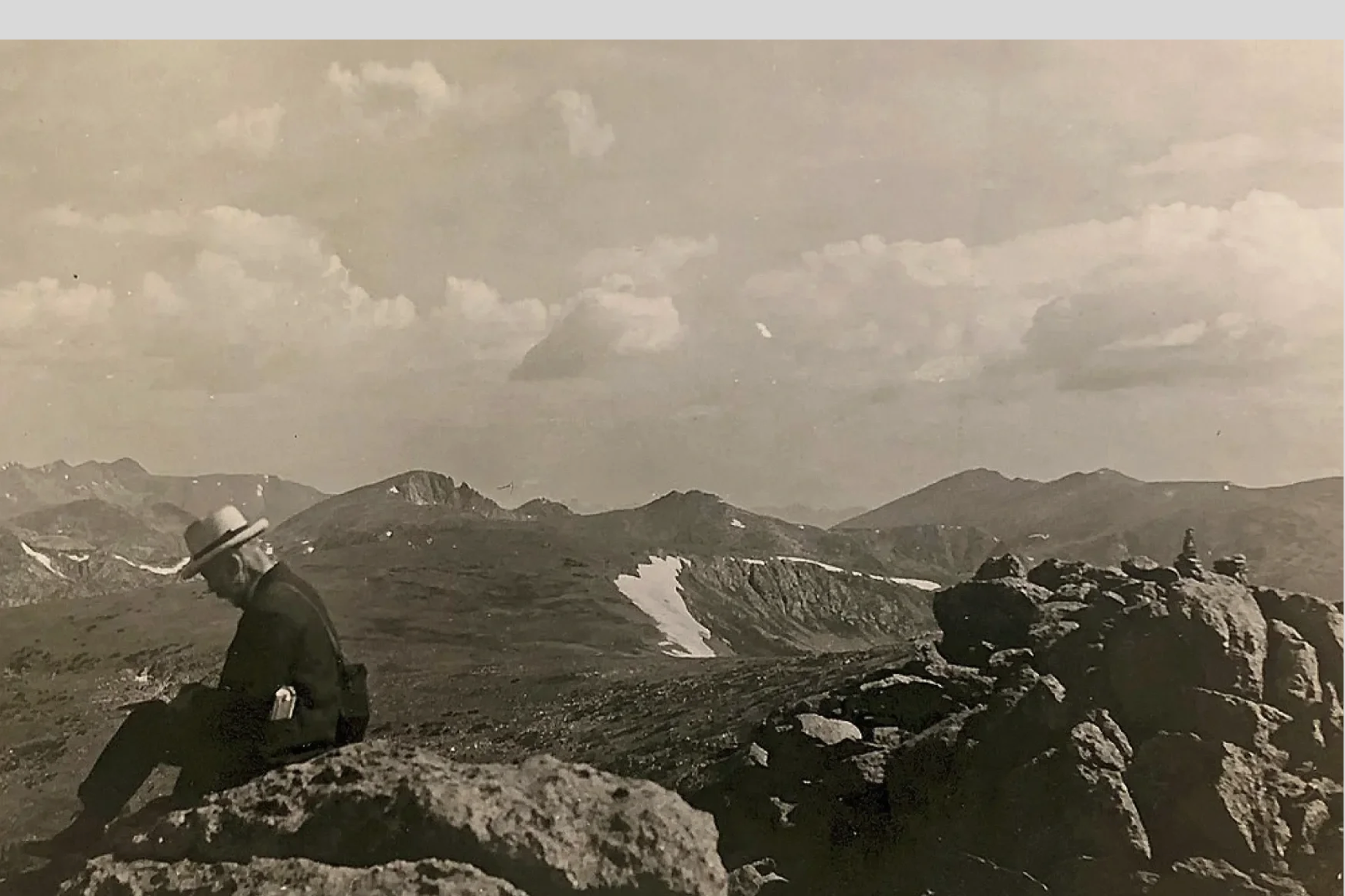
William Morris Davis near Devil’s Thumb in Colorado. Davis was a leading American geologist and pioneer of what is now termed geomorphology (Davis favored Huxley’s term “physiography”). As such, he was much concerned with contemporary debates about uniformitarianism
All this makes perfect sense. “Uniformitarianism” should mean the doctrine(s) of Hutton and Lyell; it should be understood as the notion that presently observable processes provide the best way of interpreting the remains of the past. Perhaps it should also mean the idea that the energy of geological processes is steady over time; that the elevation of land is an incremental process, always taking place somewhere on the earth (ditto depression); and that the history of earth is “continuous,” as opposed to interrupted by sharp breaks in sedimentary deposition or the composition of the biota.
What it should not mean is what many people in the middle of the twentieth century took it to mean— the view that nature’s laws are stable in space and time.
Here, then, is a puzzle. How did uniformitarianism acquire such an unusual meaning, presumably during the twentieth century? How did it come to stand for a methodological position so broad that Nelson Goodman (1967) could argue that it meant no more than the principle of simplicity in theory choice— the policy that we should prefer the simplest explanation, all else being equal? As far as I’m aware, no one has asked this particular question. But Stephen Jay Gould, author of the distinction between substantive and methodological uniformitarianism, has addressed a related one. How did “uniformitarianism” acquire its cleft meaning— part methodological prescription, part substantive interpretation?
Lyell pulls a “fast one”
In a sense, the answer is obvious. The “doctrine” of Hutton and Lyell included both a preferred methodological approach and a set of theoretical positions these authors were at pains to defend. Some later geologists used “uniformitarianism” to refer to the methodological approach; others to the theoretical positions. So, as time went on, uniformitarianism acquired multiple, jumbled-up meanings, including the idea that nature’s laws are invariant in space and time.
This is fairly compelling, even if it fails to answer the question of why uniformitarianism came to be associated with a claim about the stability of natural laws. Yet Gould, in seeking to explain how people became so confused about the meaning of uniformitarianism, put a conspiratorial twist on things. After stating that Lyell, in the Principles, “united under the common rubric of uniformity two different kinds of claims— a set of methodological statements about proper scientific procedure, and a group of statements about how the world work,” he went on to claim that Lyell “pulled a fast one— perhaps the neatest trick of rhetoric, measured by subsequent success, in the entire history of science” (Gould 1987, 118–119). That is:
He labeled all these different meanings as “uniformity,” and argued that since all working scientists must embrace the methodological principles, the substantive claims must be true as well. Like wily Odysseus clinging to the sheep’s underside, the dubious substantive meanings of uniformity sneaked into geological orthodoxy— past an undiscerning Cyclops, blinded with Lyell’s rhetoric— by holding fast to the methodological principles that all scientists accepted. (Gould 1987, 119)
Basically, Lyell ran together different senses of uniformity, and because he did it with such conviction, in the process elevating his position to the status of geological orthodoxy, he succeeded in transmitting to posterity a fundamental confusion, which persisted throughout the intervening decades in the form of two distinct notions of uniformitarianism— one substantive, the other methodological.
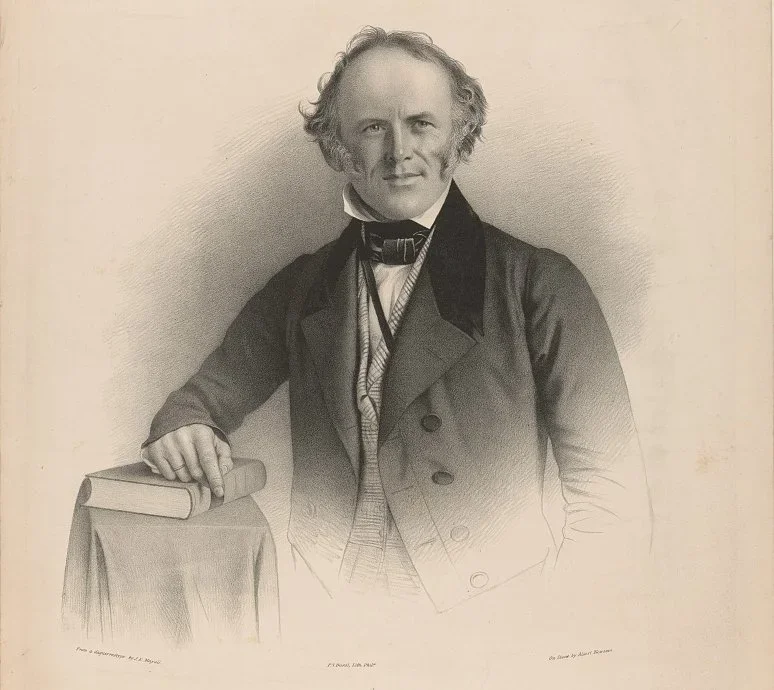
Charles Lyell in the prime of life, preparing to full a fast one
There are two problems with this version of the argument. The first is that Lyell’s more sophisticated readers saw past his “creative confusion” about the meaning of uniformity. They agreed with him that traces of the past should be attributed to actual causes— “To this claim,” one reviewer wrote, “we give, with Mr. Lyell, and, we believe, the great body of European geologists, our unqualified acceptance” (Rudwick 2014, 323). Yet they denied that these causes must have acted with uniform intensity throughout the whole of earth’s history. As Lyell’s friend, Roderick Murchison put it:
Agreeing, as I do, with my associate Lyell in a belief in the constancy of the laws of Nature, I am rejoiced to be his follower in reasoning from the present to the past: at the same time I maintain, from the evidences presented to me in the crust of the earth, that during former periods there were, at intervals, causes in action of much greater intensity than those of which the human race has ever had an example. (Murchison 1854, 494)
Others made similar noises, including Adam Sedgwick, who argued that “[Lyell’s theory] confounds the immutable and primary laws of matter with the mutable results arising from their irregular combination.”
It assumes, that in the laboratory of nature, no elements have ever been brought together which we ourselves have not seen combined; that no forces have been developed by their combination, of which we have not witnessed the effects. (Sedgwick 1831, 301)
“What is this,” Sedgwick concluded, “but to limit the riches of the kingdoms of nature by the poverty of our own knowledge; and to surrender ourselves to a mischievous, but not uncommon philosophical scepticism, which makes us deny the reality of what we have not seen, and doubt the truth of what we do not perfectly comprehend?”
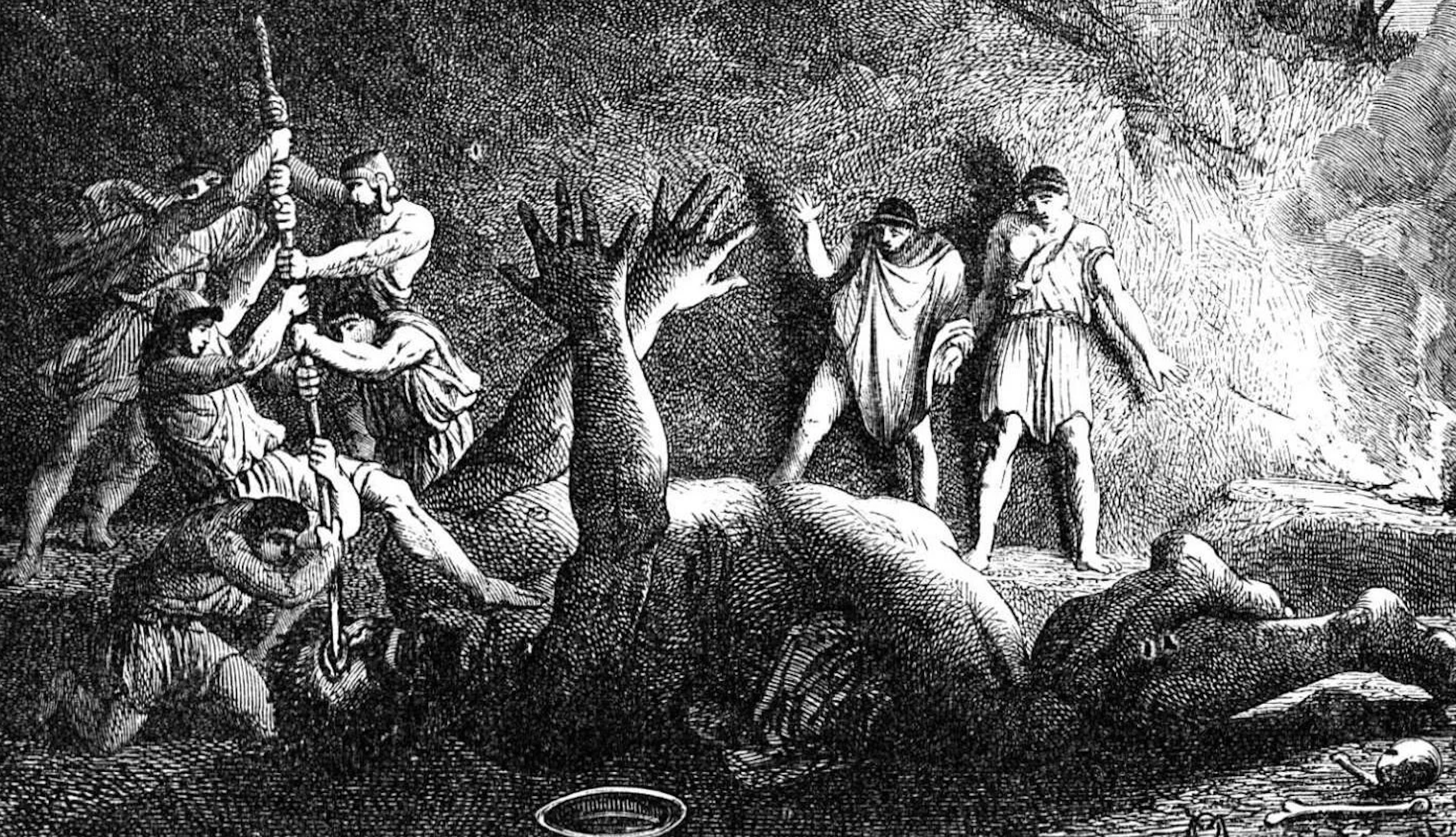
Lyell, rhetorical spear in hand, blinding the shit out of his colleagues
So Gould was wrong when he suggested that “dubious substantive meanings of uniformity sneaked into geological orthodoxy— past an undiscerning Cyclops, blinded with Lyell’s rhetoric— by holding fast to the methodological principles that all scientists accepted.” At least Lyell’s early readers had no trouble affirming the methodological principles while rejecting the “dubious substantive meanings”; and as the earlier quotation from Davis indicates, subsequent generations were no less wary of “rigid limitation[s] of past processes to the rates of present [ones]”— that is, of attempts to spice “[methodological] uniformitarianism” with geotheory.
But there is another problem. Most geologists of Gould’s generation tended to suppose that Lyell won a lasting victory against his opponents– people like Murchison, Sedgwick, and Whewell. But the victory was less complete than they supposed. By the end of Lyell’s life, the debate between “uniformitarians” and “catastrophists” had largely run its course, and leading theorists self-consciously invoked elements of both traditions in their writings. Emblematic was Eduard Suess, whose grand tectonic synthesis aimed “to enlarge the meaning of uniform change to include phenomena not presently observable”— things like massive floods, catastrophic sedimentation, and large-scale movements of the crust (Greene 1982, 166). Similarly, Thomas Chamberlin’s theory of periodic diastrophism resisted classification as either “uniformitarian” or “catastrophist.” (Chamberlin once called himself a “qualified uniformitarian,” but with his vision of a contracting earth periodically beset with diastrophic revolutions, this was no small qualification.) As for true-blue uniformitarianism, this was down on its luck during the early decades of the twentieth century, especially in the United States. Histories of geology written around the time treated Lyell “as an important, but not as a pivotal figure” in the development of the discipline and declined to describe the 1830s and 40s “as years of debate between two schools of thought, one led by Lyell, the other [by] Buckland, Sedgwick and Murchison” (Bartholomew 1979, 276). So, again, it is wrong to say that Lyellian uniformitarianism became orthodoxy in the 1830s and remained so into the twentieth century. If Lyell’s “creative confusion” had lasting effects on geological discourse, it was not because Lyell’s influence radiated undimmed through the decades.
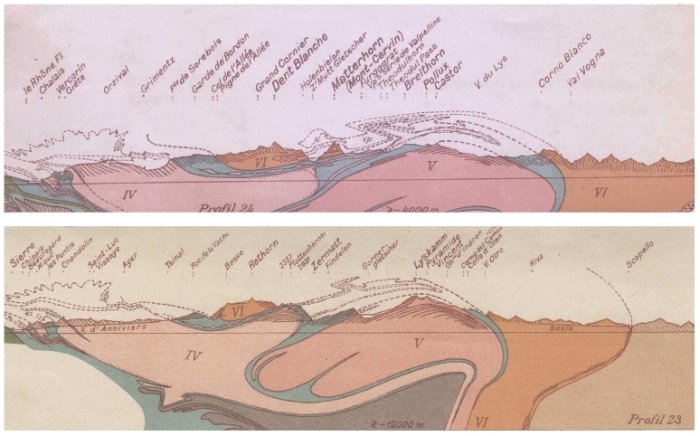
Émile Argand’s cross-section of the Swiss Alps showing the now-famous “nappe” structures he was instrumental in elucidating. This sort of structure was something classical uniformitarianism, with its emphasis on vertical tectonic processes and elevation by igneous intrusion, was ill-equipped to explain. So as geologists became increasingly preoccupied with questions of mountain-building during the second half of the nineteenth century, uniformitarianism took a hit
This “eclipse” of uniformitarian geology is not as widely known as it should be— many commenters seem to think that “uniformitarianism” was the law of the land from the 1830s until the neo-catastrophist challenge of the 1970s and ‘80s. I’ll return to this in a moment. First, though, a word on Lyell and laws.
Lyell and laws
It is not a complete mystery why someone would think uniformitarianism had to do with natural laws. Writing of “the causes which have retarded the progress of geology,” Lyell implicated the tendency of observers to put challenging appearances down to the action of “mysterious and extraordinary agenc[ies],” whereas increasingly, these appearances were “recognized as the necessary result of the laws now governing the material world” (Lyell 1830, 75). The shift toward more scientific modes of thinking was part of a pattern that “accompanies the growing intelligence of every people, in regard to the economy of nature in modern times.”
In an early stage of advancement, when a great number of natural appearances are unintelligible, an eclipse, an earthquake, a flood, or the approach of a comet, with many other occurrences afterwards found to belong to the regular course of events, are regarded as prodigies. The same delusion prevails as to moral phenomena, and many of these are ascribed to the intervention of demons, ghosts, witches, and other immaterial and supernatural agents. By degrees, many of the enigmas of the moral and physical world are explained, and, instead of being due to extrinsic and irregular causes, they are found to depend on fixed and invariable laws. The philosopher at last becomes convinced of the undeviating uniformity of secondary causes, and, guided by his faith in this principle, he determines the probability of accounts transmitted to him of former occurrences, and often rejects the fabulous tales of former ages, on the ground of their being irreconcilable with the experience of more enlightened ages. (Lyell 1830, 76)
So, in this rather crude and positivistic history, “irregularity” is associated with primitive modes of thought, and “uniformity” with philosophical caution.* Few would have missed the insinuation that Lyell’s opponents, by positing causes that went beyond the “regular” course of nature, approximated the benighted savage more than the enlightened philosopher. Tsk-tsk.
[* Roy Porter, in a perceptive analysis of the Principles, places Lyell in the tradition of “the brash, rationalist, philosophical conjectural history of the Enlightenment, with its pose of superior detachment, its psychological reductionism, its sardonic contempt for the Middle Ages” (Porter 1979, 96). This is spot on.]
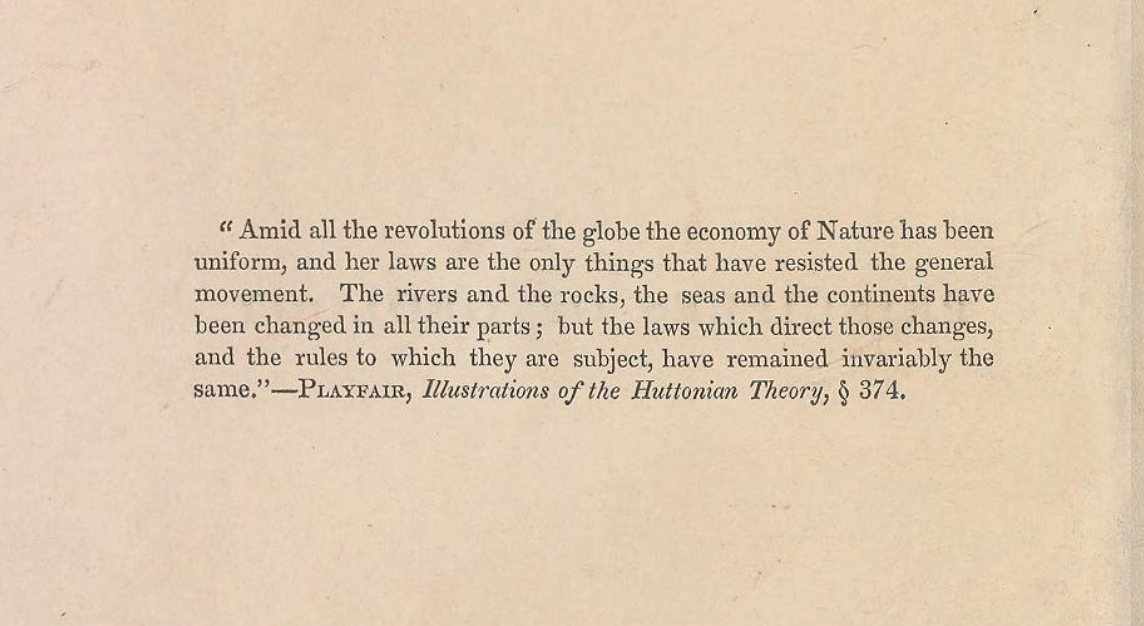
The epigraph of the first volume of the Principles, from John Playfair’s 1802 Illustrations of the Huttonian Theory
Yet there is a problem with Lyell’s reasoning, which Sedgwick in particular saw through. As he argued in his 1831 address to the Geological Society of London, it is not possible to lash together the “immutable and primary laws of matter” and the undeviating constancy of secondary causes. The one simply does not imply the other. At which point Lyell’s attempt to position his own approach at the pinnacle of Enlightenment progress stumbles. Not just Lyell, but virtually all of his contemporaries believed in the stability of nature’s laws. Where they differed was on the question of whether this implied anything about the constancy of secondary causes, and in particular, about the uniform intensity of geologic processes over time. Lyell seems to have thought that it did; his opponents disagreed. Here, it seems, his opponents held the winning hand.*
[* Elsewhere, Lyell made a more modest point. Writing in Chapter IX of Volume I, he claimed that “our estimate… of the value of all geological evidence, and the interest derived from the investigation of the earth’s history, must depend entirely on the degree of confidence which we feel in regard to the permanency of the laws of nature. Their immutable constancy alone can enable us to reason from analogy, by the strict rules of induction, respecting the events of former ages, or, by a comparison of the state of things at two distinct geological epochs, to arrive at the knowledge of general principles in the economy of our terrestrial system” (Lyell 1830, 165). Few would have disagreed with this claim, which merely stated that, unless the laws of nature are stable, it is not possible to reconstruct past states of affairs by analogy with present observations, or to use these reconstructions to better understand the economy of nature.]
Anyway, it is easy to see why Lyell’s contemporaries did not associate “uniformitarianism” with the view that nature’s laws are stable. Everyone thought nature’s laws were stable, whether they were of a uniformitarian disposition or not. As such, when they described uniformitarianism, they tended to stress more distinctively uniformitarian views, like the notion that present causes provide the best means of interpreting the past (also a widely held view, but one that uniformitarians pushed harder than everyone else).
The puzzle is coming into focus. During the twentieth century, uniformitarianism came to be associated with a view that was not originally regarded as distinctively uniformitarian— indeed, a view that basically everyone held. So, again: what was responsible for this remarkable development?
The eclipse of Lyell
At this point I want to return to a point I raised earlier. During the late nineteenth and early twentieth centuries, the fortunes of true-blue uniformitarianism were at their nadir— especially in the United States, but also in continental Europe, where the problem of mountain-building dominated the explanatory agenda (Greene 1982). This is important to appreciate, because it focuses our attention on the timing and circumstances of Lyell’s revival, which, I claim, began in earnest in the 1940s. First, however, the eclipse.
The eclipse of Lyellian geology began in the nineteenth century, and perhaps should not be called an “eclipse,” since that implies a level of dominance that “uniformitarianism” never achievement outside of Great Britain during the closing decades of that century. Huxley, in the address mentioned above, refused to elevate uniformitarianism over catastrophism, even at the advanced date of 1869. Cribbing a line from Whewell, he noted that while “Catastrophism has insisted upon the existence of a nearly unlimited bank of force,” “Uniformitarianism… has with equal justice insisted upon a practically unlimited bank of time, ready to discount any quantity of hypothetical power” (Huxley 1874, 242, emphasis added). The framing suggests competition, but Huxley’s point was that there was “no necessary theoretical antagonism between Catastrophism and Uniformitarianism,” since “catastrophes may be part and parcel of uniformity.” He illustrated the point by drawing an analogy with a clock, which is “a model of uniform action”— tick-tock, tick-tock.
But the striking of the clock is essentially a catastrophe; the hammer might be made to blow up a barrel of gunpowder, or turn on a deluge of water; and, by proper arrangement, the clock, instead of marking the hours, might strike at all sorts of irregular periods, never twice alike, in the intervals, force, or number of its blows. Nevertheless, all these irregular, and apparently lawless, catastrophes would be the result of an absolutely uniformitarian action; and we would have two schools of clock-theorists, one studying the hammer and the other the pendulum. (Huxley 1874, 242–243)
Later theorists would have similar ideas, not least the master geologist of the post-Lyellian interval, Eduard Suess.*
[* Two years ago I did a whole post on whether Suess was a Lyellian or not. The verdict: mostly not.]
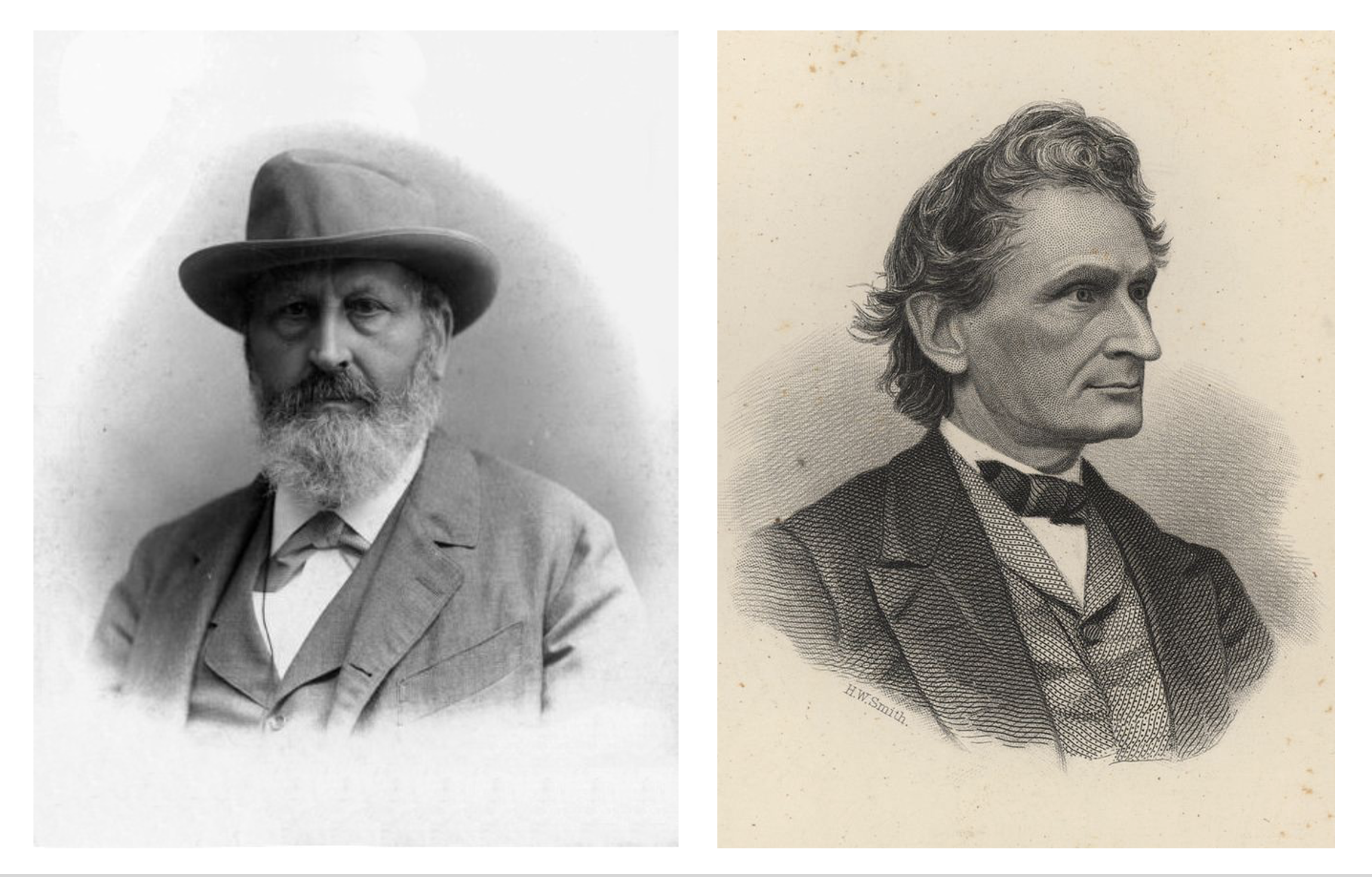
Eduard Suess, left, and James Dwight Dana, right
In America, the most important geotheorist of the period was James Dwight Dana. Like Suess, he represented what Huxley called “the third phase of geological speculation,” which embraced “all that is sound in both Catastrophism and Uniformitarianism, while [rejecting] the arbitrary assumptions of the one and the, as arbitrary, limitations of the other” (Huxley 1874, 243). Huxley termed this stance “Evolutionism,” and specified that its goal was “to deduce the properties of the world, as a whole, from the known properties of the matter of the earth, in the condition in which the earth has been placed” (238). But don’t take it from Huxley— here is Dana:
The general law at the basis of all development is strikingly exhibited in the earth’s physical progress… The law is simply this:— Unity evolving multiplicity of parts through successive individualizations, proceeding from the more fundamental onward. (Dana 1863, 739)*
This was reminiscent of Herbert Spencer’s definition of evolution: “an integration of matter and concomitant dissipation of motion; during which matter passes from an indefinite incoherent homogeneity to a definite coherent heterogeneity; and during which retained motion undergoes a parallel transformation.” Elsewhere, Dana compared the evolution of the earth to the development of an animal from a germ:
[The] earth also, according to Geology, has been brought to its present condition through a series of changes or progressive formations, and from a state as utterly featureless as a germ. Moreover, like any plant or animal, it has its special systems of interior and exterior structure, and of interior and exterior conditions, movements, and changes; and, although infinite Mind has guided all events toward the great end,— a world for mind,— the earth has, under this guidance and appointed law, passed through a regular course of history or growth. (Dana 1863, 2)
All this begs for comment, but for now it suffices to say that Dana’s geology differs from Lyell’s as “Evolutionism” differs from “Uniformitarianism”— which is to say, considerably.
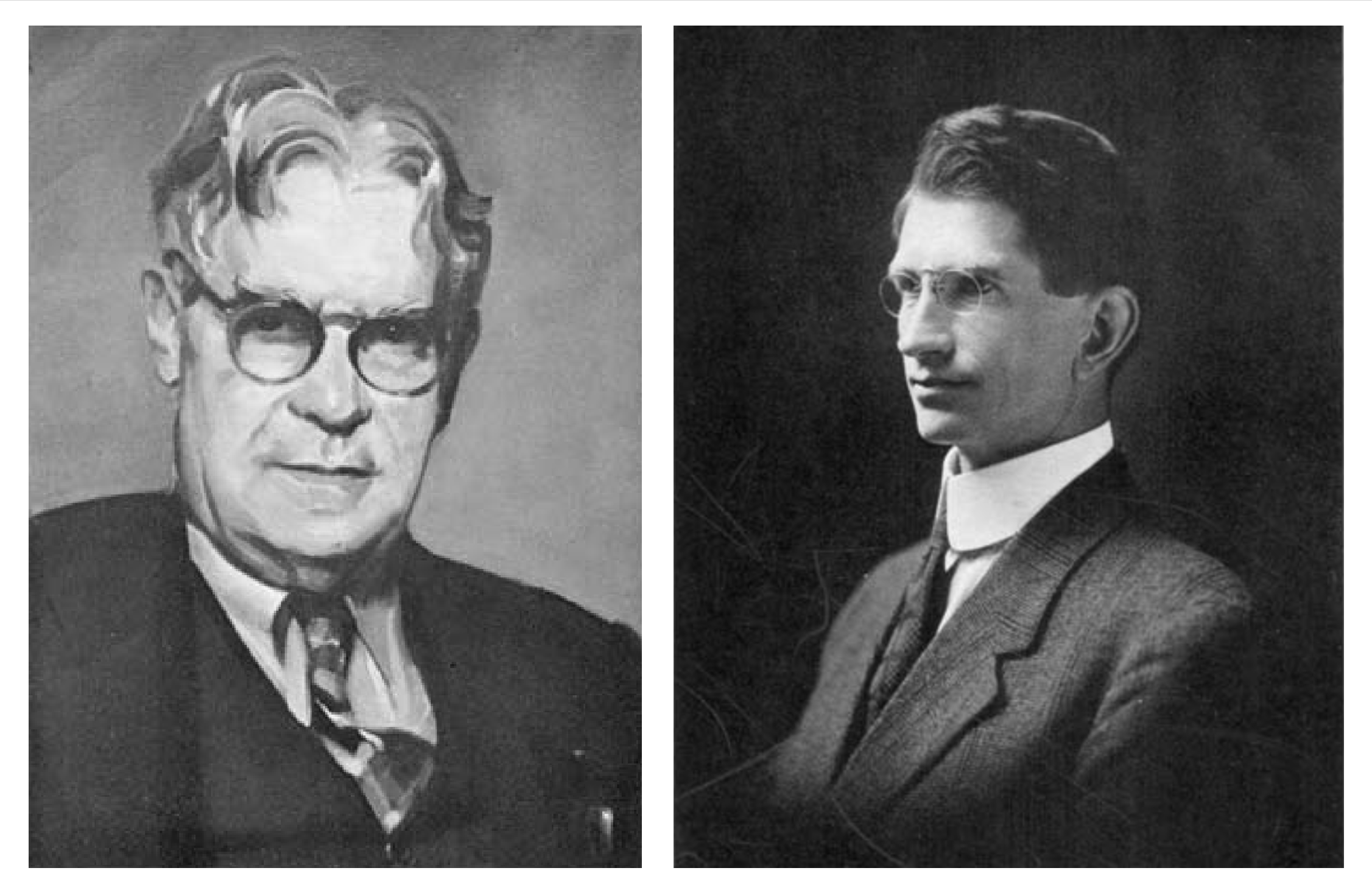
Edward Berry, a die-hard uniformitarian, left, and Joseph Barrell, an advocate of diastrophic periodicity, right
The next major figure in American geotheory was Chamberlin, and he too was an “Evolutionist.” I won’t review Chamberlin’s theory here— Lord knows I’ve done that enough times. I’ll simply observe that uniformitarianism was never the dominant theoretical tradition in America during Chamberlin’s lifetime— not during the nineteenth century, when Dana was the supreme authority, nor during the twentieth, when Chamberlin grabbed the scepter. In an earlier post, I reviewed some of the evidence that periodic diastrophism was the dominant idea in American geology after about 1910. Yet it may be useful to add that contemporary uniformitarians were aware of their minority status, and bristled against it. Writing in 1929, Edward Berry seemed almost depressed at his inability to move the needle. “It is too much to expect a single protest will effectively shake such a firmly established tradition,” he wrote, referring to Chamberlin’s diastrophic theory (Berry 1929, 12)). Still, he registered his opinion “that life has always developed in an orderly way; that physical conditions have always changed slowly; and that the slowly shifting geographic pattern, through its influence on climate, was a more general and more potent factor in evolution than orogenesis.” Again, this was the minority position in 1920s America. More popular was Joseph Barrell’s view that the “doctrine of uniformitarianism” ignored “the presence of age-long rhythms” or else “smoothed them out” (Barrell 1917, 743). For Barrell, uniformitarianism provided only “a beginning for investigation; the establishment of a datum plane against which may be sought out and measured the amplitudes of oscillations of all factors which have found a direct or indirect record in the crust” (Barrell 1917, 743). It was not the last word in geological research, and if taken too seriously, had the effect of flattening out the past, and artificially inflating its similarity to the present.
The upshot of all this is pretty clear. There was no uniformitarian stranglehold on geology during the second half of the nineteenth or the first half of the twentieth century, especially outside of Britain. In the United States and continental Europe, uniformitarianism was a minority position, and Lyell a figure of modest importance, easily eclipsed by Hutton in the mythology of the discipline. However, by the middle of the twentieth century, the fortunes of uniformitarianism had begun to change, as Lyell rocketed back into vogue. The change was associated with the meaning-shift I have been concerned to explain— or so I will argue in Part 2 of this essay, which you can read by following this link.
References
* For an archive of our previous Lyellian posts, follow this link…
Barrell, J. 1917. Rhythms and the measurements of geologic time. Bulletin of the Geological Society of America 28:794–904.
Bartholomew, M. 1979. The singularity of Lyell. History of Science 17:276–293.
Berry, E. W. 1929. Shall we return to cataclysmal geology? American Journal of Science 77:1–12.
Dana, J. D. 1863. Manual of Geology, treating of the principles of the science, with special reference to American geological history, for the use of colleges, academies, and schools of science. Philadelphia: T. Bliss & Co.
Davis, W. M. 1895. Bearing of physiography on uniformitarianism. Geological Society of America Bulletin 7:8–11.
Goodman, N. 1967. Uniformity and simplicity. In C. C. Albritton, ed., Uniformity and Simplicity: A Symposium on the Principle of the Uniformity of Nature, 92–99. Geological Society of America (Special Paper 89).
Gould, S. J. 1965 Is uniformitarianism necessary? American Journal of Science 263:223–228.
Gould, S. J. 1987. Time’s Arrow, Time’s Cycle: Myth and Metaphor in the Discovery of Deep Time. Cambridge, MA: Harvard University Press.
Greene, M. T. 1982. Geology in the Nineteenth Century: Changing Views of a Changing World. Ithaca: Cornell University Press.
Huxley, T. H. 1874. Lay Sermons, Addresses and Reviews. London: Macmillan.
Lyell, C. 1830. Principles of Geology, Being an Attempt to Explain the Former Changes of the Earth’s Surface, by Reference to Causes now in Operation. Volume 1 (First Edition). London: John Murray.
Murchison, R.I. 1854. Siluria: A History of the Oldest Rocks in the British Isles and Other Countries; With Sketches of the Origin and Distribution of Native Gold, the General Succession of Geological Formations, and Changes of the Earth’s Surface. London: John Murray.
Porter, T. 1979. Charles Lyell and the principles of the history of geology. The British Journal for the History of Science 9:91–103.
Rudwick, M.J.S. 2014. Earth's Deep History: How It Was Discovered and Why It Matters. Chicago: University of Chicago Press.
Sedgwick, A. 1831. Address to the Geological Society, by the President, the Rev. Adam Sedgwick. M. A., F. R. S., on announcing the first award of the Wollaston Prize (February 18, 183). The Philosophical Magazine 9:271–317.