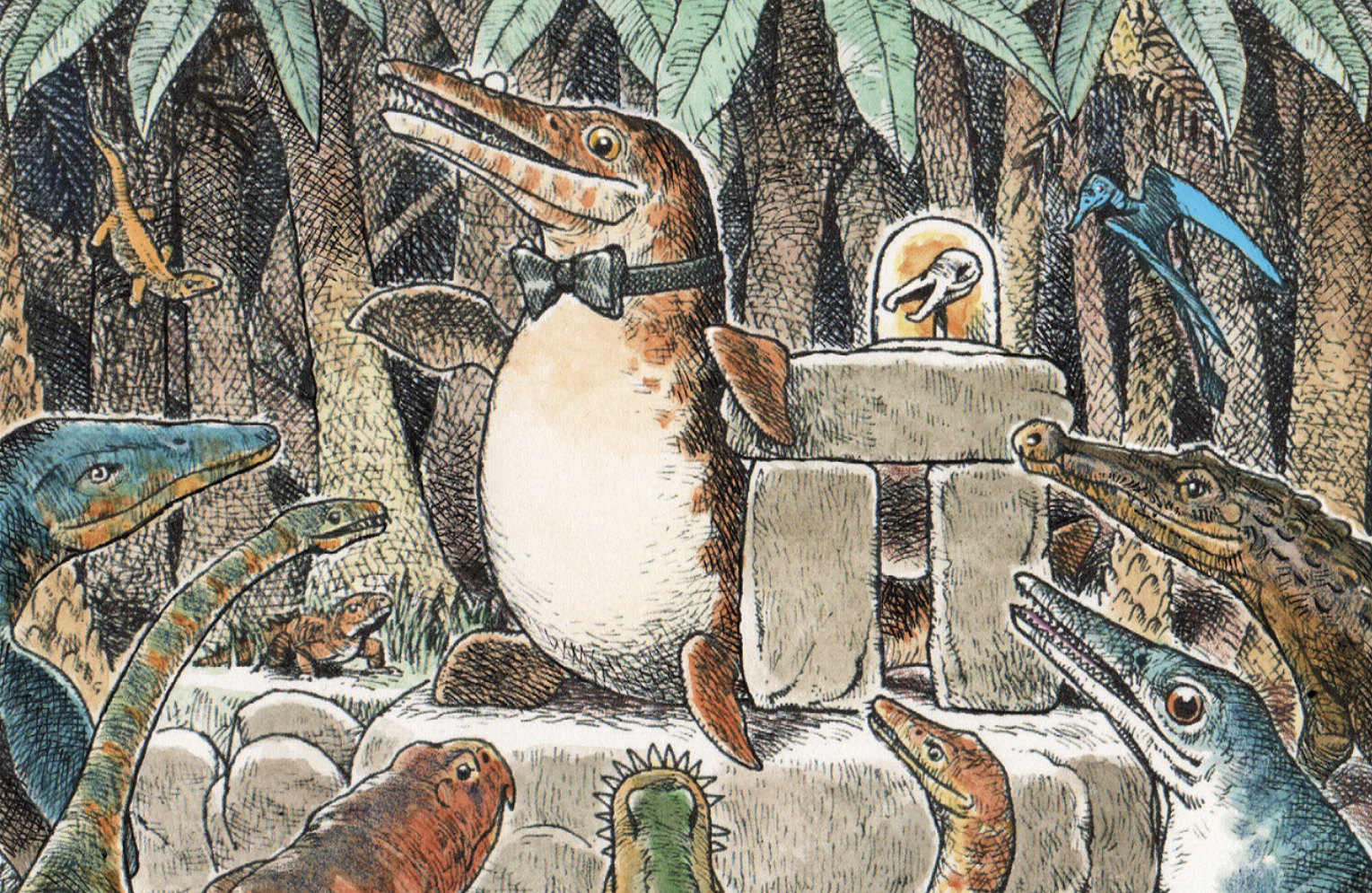
* This is the latest installment of “Problematica.” Its subject is a new book, The Science of Lost Worlds, written by Leverhulme Laureate and enfant terrible of the Extinct blog, Adrian Currie. The title image shows Professor Ichthy, breakout star of the book, delivering his inaugural lecture. (Professor Ichthy is a reference to “Professor Ichthyosaurus”— if you don’t know, click here.) This image, along with many others in the book, was drawn by the talented Jim Robins.
“Problematica” is written by Max Dresow…
Back in 2022, when I was just a snot-nosed postdoc (edit: apparently I’m still a postdoc), I was invited to speak at a graduate conference at the University of Notre Dame. Adrian Currie was also a speaker and unbeknownst to either of us we had chosen to speak on the same topic— the bizarre organisms of the Ediacara fauna. Of course, the talks were different. I was discussing uniformitarianism in the earth sciences, and using the Ediacarans to illustrate that sometimes— apparently— the present isn’t the key to the past. Adrian was sketching a project that would grow into his latest book, The Science of Lost Worlds, now available (for free) at BSPS Open.
Following the conference I sometimes thought about Adrian’s project. Then in 2024, I was invited to participate in a retreat organized around his manuscript, to be held at a little eco-farm in Dorset. The farm was set amid hedgerows and clay vales, just as I’d always imagined southern England. In the morning leaves gathered so much dew that they bent under the weight. In the afternoon the sun shone through a bleary sky. It was a lovely place, and for several days we went through the book chapter-by-chapter, sparing no criticism.* Then, last month, I traveled to England again, this time to deliver a few remarks on the occasion of the book launch.
[* Adrian was the best host imaginable for an event like this. Before the retreat we visited The Etches Collection, home to a giant pliosaur skull recently extracted from a seaside cliff. Later we went to Lyme Regis, one-time haunt of Mary Anning. Then, once I’d left, they went fossil hunting. Truly, we were a spoiled group.]
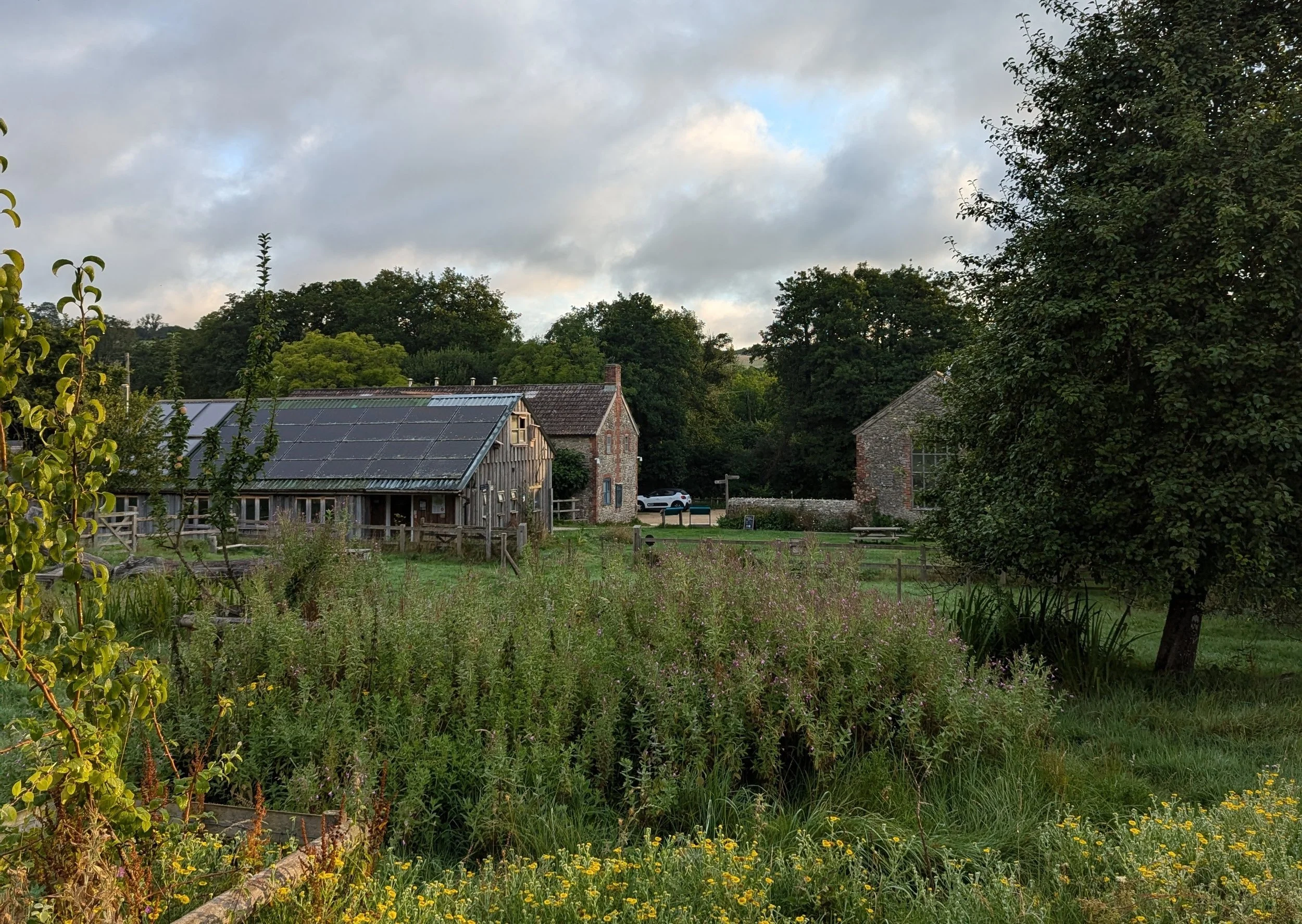
Setting for the retreat
I’m not going to use this space to rehearse the remarks I made last month. These, anyway, were mostly about the Ediacara fauna, and made only sparing contact with the book’s main argument. Instead, I want to get into the weeds— to examine the details of Adrian’s account, paying special attention to his description of how scientists recover “lost worlds.” I will leave to others the task of evaluating the conclusions he draws in the second half of the book. (A sample: the sciences of the past are sciences of deep possibility.) For my part, I’m interested in how Adrian characterizes the practices he’s interested in, and in certain metaphilosophical questions about how to best describe scientific practices for philosophical ends.
To begin, some basics. Everyone knows that historical evidence tends to be biased and incomplete. Take the fossil record. Very few organisms ever become fossils, and of those that do, most are destroyed before they are ever observed by a paleontologist. To use the fossil record to make inferences, then, we need a way of coping with this situation. We need, in other words, a strategy for getting around information loss, for securing an epistemic connection with the past in the absence of a rich body of material evidence.
Adrian discusses this problem in terms of “erasure.” Some things fail to leave historical evidence (“traces”) or leave traces that are later destroyed. They are accordingly erased, and if we want to know about them, we have to get creative.*
[* There’s no requirement that erased objects be struck completely from historical records. Erasure is something that happens to traces, and it can happen to a greater or lesser degree. So a historical object— an individual or process— can be more or less erased, depending on how much evidence of that object survives.]
Erasure is a serious problem. Many philosophers have discussed it, including Adrian, whose first book is largely about how scientists deal with the problem of trace limitation. But it isn’t the only problem historical scientists face. That’s because, in addition to being known from imperfect records, sometimes the past is just plain weird— and this presents its own challenge for scientists. These don’t have to do with the erasure, or the loss of historical evidence. They have to do instead with a certain disconnect between the past and the present, which Adrian characterizes as a kind of ontological impoverishment, or “loss.”
Consider— some things just don’t exist anymore; and since we tend to understand the past by means of careful observational and experimental studies of the present, this puts historical scientists at a disadvantage when the things they’d like to understand lack close analogs in the modern world. Examples abound. One of my favorites concerns earth’s first tectonic regime— what was the earth like before plate tectonics? Of course we don’t know, in part because the regime is lost— it doesn't exist anymore. In this case, it is also erased, since few records of the early earth survive. But this just goes to show that loss and erasure are not mutually exclusive processes. Something can be lost and erased, or lost and just a little erased, or slightly lost and mostly erased… there are lots of possibilities.
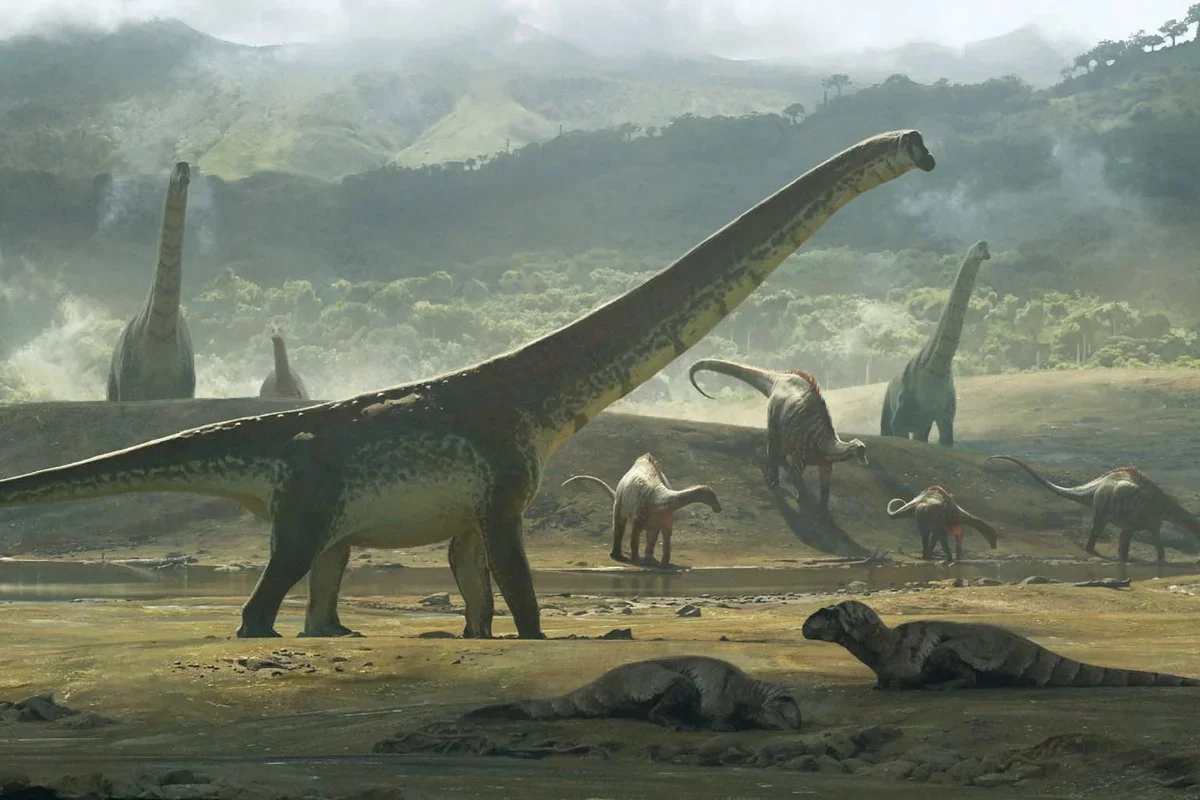
Lost but not forgotten (art by Chase Stone)
Adrian’s favorite example of loss, I gather, is sauropods. These are lost because the clade is extinct, and nothing resembling them exists anymore. So how can we learn about sauropods when the largest even-remotely-comparable animal is an African elephant? The problem is a generic one, and can be phrased as follows.
How do scientists learn about things that no longer exist, especially when these things do not closely resemble anything to which we have direct epistemic access?
Notice that this question is meant to cover both historical individuals and timeless kinds— both Brontosaurus and “supermassive terrestrial animals.” But in either case the problem is one of analog limitation. We want to know about an object, but no comparable object exists on the planet. So we can’t learn about it by studying a close analog: some other strategy is required.
It’s worth pausing to review a few distinctions. The species Brontosaurus excelsus can be regarded either as a historical individual or as a member of the historical kind Brontosaurus. These sound different (and perhaps the former gives off a whiff of the bad old essentialism). But they are metaphysically equivalent. In the one we speak of (historical) kinds with members, in the other of individuals with parts. But nothing of substance hinges on the distinction; so whether you prefer to think in terms of historical kinds or historical individuals is a matter of preference.
Of course, there are also a-historical kinds, like gold and supermassive terrestrial animal. These are not individuals, or at least they are not usually regarded as individuals. (If the kind supermassive terrestrial animal is an individual, it’s because it maps onto a monophyletic clade, which is a kind of fluke.) Anyway, you’re probably wondering why I’m telling you this. It’s because someone interested in sauropods might be interested in the historical kind sauropod or in the ahistorical kind supermassive terrestrial animal. And depending on which of these they’re interested in, the object might be lost or not. (Imagine a situation in which sauropods are extinct, but supermassive terrestrial animals are not.)
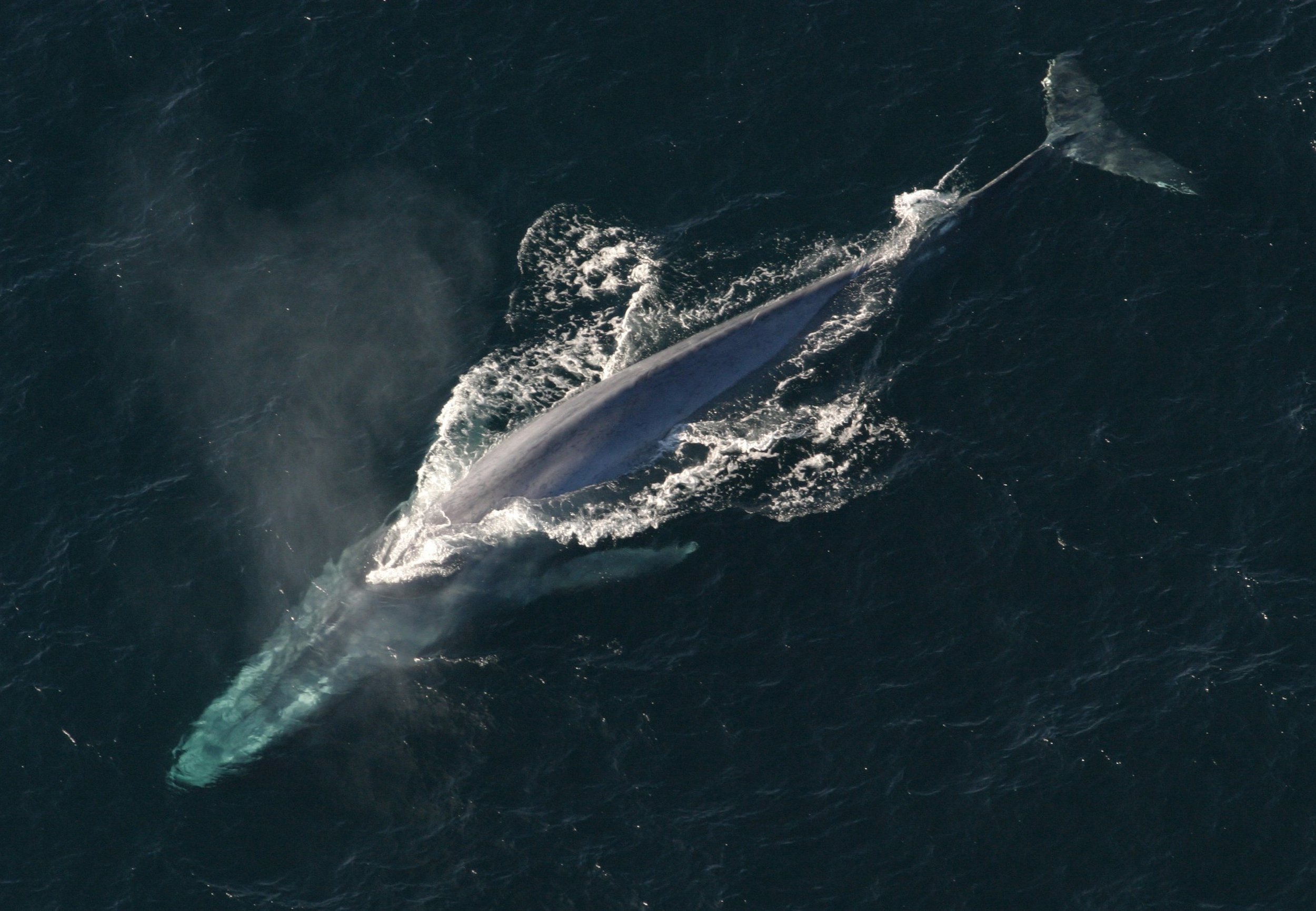
Supermassive, but not a land animal
Adrian knows all this, and so describes loss as a graded concept— something can be lost to a greater or a lesser degree. He also describes loss as a context-sensitive concept— something can be lost under one description, and not-lost under another. He even grants that loss and erasure can be difficult to distinguish. Plate tectonics has chewed up nearly all traces of the early earth (unlike Mars, where rocks older than about four billion years are abundantly developed). So here, loss and erasure converge, even if they can still be distinguished on a conceptual level.
But enough fussing about little stuff. Let’s move on to the main attraction— the strategies that scientists use to reconstruct lost worlds.
* * *
I have said that the basic problem of loss is one of analog limitation. We want to learn about an object, but nothing of the sort exists on earth anymore— so what are we to do? Actually, this isn’t quite right. As we’ll see in a moment, some problems involving loss have nothing at all to do with analogs and analog limitation. But for now, stick with the analog idea.
As Adrian argues, historical scientists have two broad responses to analog limitation. On the one hand they can artifice— they can construct a model of a lost object that permits them to probe certain of its properties: to explore, intervene, and test provisional understandings in a proactive way. Or they can anchor— they can examine “multiple independent instances of [a] lost [object’s] properties” in order to cobble together an understanding of the thing (p. 26). As Adrian observes, artificing involves characterizing an object as a member of a kind— historical or ahistorical— “and then constructing a token of that type (or, if you want, something analogous or sufficiently similar to that type)” (p. 69). By contrast, anchoring involves “conceiving of the [object] as a historical or an ahistorical kind [so as to] bring it into conversation with other [instances of that kind— anchors]” (p. 136). This “[allows] us to situate the [object] within the class, thus potentially establishing some of its properties, as well as potentially informing us about the class itself.”
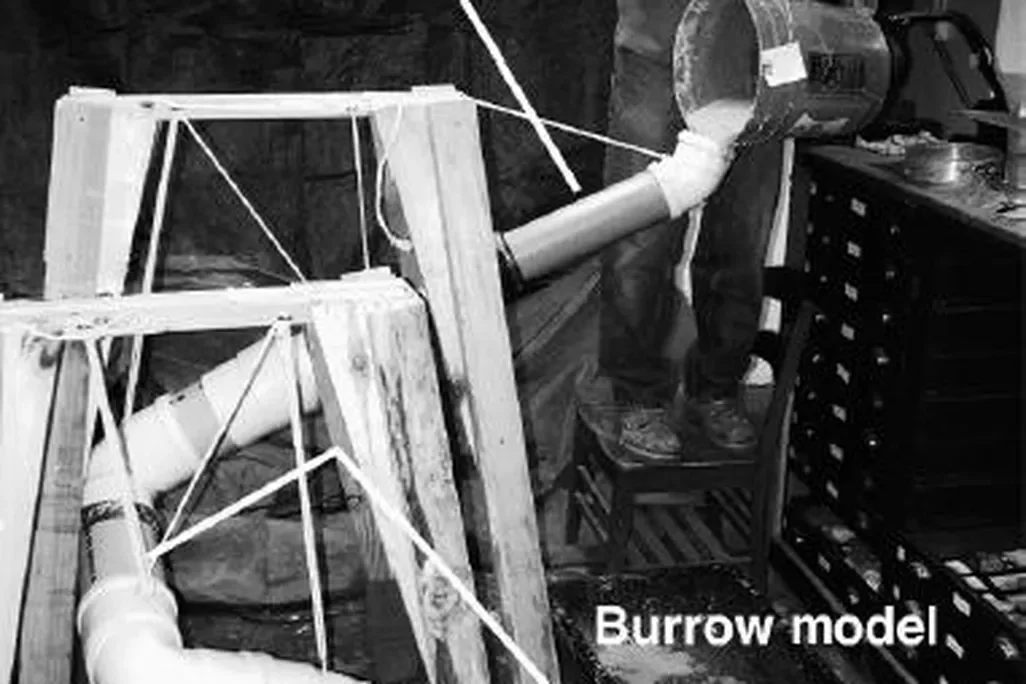
Adrian’s most memorable example of artificing— building an artificial burrow to study how bones were likely to be disposed in burrow infills. Ultimately, the researchers were interested in whether a certain dinosaur was likely to have been a burrower. (Dinosaurs, apparently, belong to the lost type “globally dominant animals that do not dig burrows”)
Artificing and anchoring are easy to understand. Don’t have an analog? Build one! Or, if it suits you, cobble together an understanding from partial analogs, in the process hopefully revealing something about the broader type. I don't have much to say about these, apart from noting that they build nicely on Adrian’s previous work. In Rock, Bone and Ruin, he discussed modeling as a response to trace (as opposed to analog) limitation. (See especially Chapter 9.) He also wrote a chapter on the “exquisite corpse method” (a great Currie coinage), which is a discussion of anchoring in all but name.
No, what I want to focus on is the third strategy for reconstructing lost worlds, which Adrian calls grafting. This involves “linking [a] lost target to something in the present via lines of causal ancestry” (p. 25). Put differently, it involves “characterizing [an object] as a historical individual such that it is continuous with some currently existing historical individual(s) or other past individuals we know about” (p. 107). As Adrian explains, grafting is about narrativity. To graft is to find a place for an object in a historical narrative or a causal trajectory. Alternatively, it is to treat an object as part of an existing individual (a clade, say), and then to ask what persistence conditions are relevant to that kind of individual.
As you will have noticed, grafting is different from the other strategies Adrian discusses. Both artificing and anchoring are responses to analog limitation. Both work by characterizing an object as a member of a type. Yet grafting is not a response to analog limitation. And it isn't about types. Grafting involves “focus[ing] on historical individuals that have been retained into the present,” or else “combining what was once disconnected into a single individual” (p. 100). It thus operates in a world of tokens, and seeks to understand them by connecting what is unknown to what is known, what is lost to what exists.
Adrian uses several examples to bring the strategy into focus. The first is an attempt to determine whether dinosaurs felt pain. Here, Adrian observes, researchers employ a method called the extant phylogenetic bracket, which works as follows. Non-avian dinosaurs are extinct, but birds and crocodiles are not. These taxa, moreover, “bracket” non-avian dinosaurs on the evolutionary tree. (Birds are more derived than non-avian dinosaurs, crocodiles more basal.) So, by using the character states of birds and crocodiles, we can infer that non-avian dinosaurs probably felt pain. It would be strange, at any rate, if dinos felt no pain, since this would mean that they lost the capacity to feel pain sometime after the split with crocodilians, only to re-evolve it in the line leading to birds. More parsimonious is to assume that crocs, dinos and birds all hurt, sometimes, as we all do.
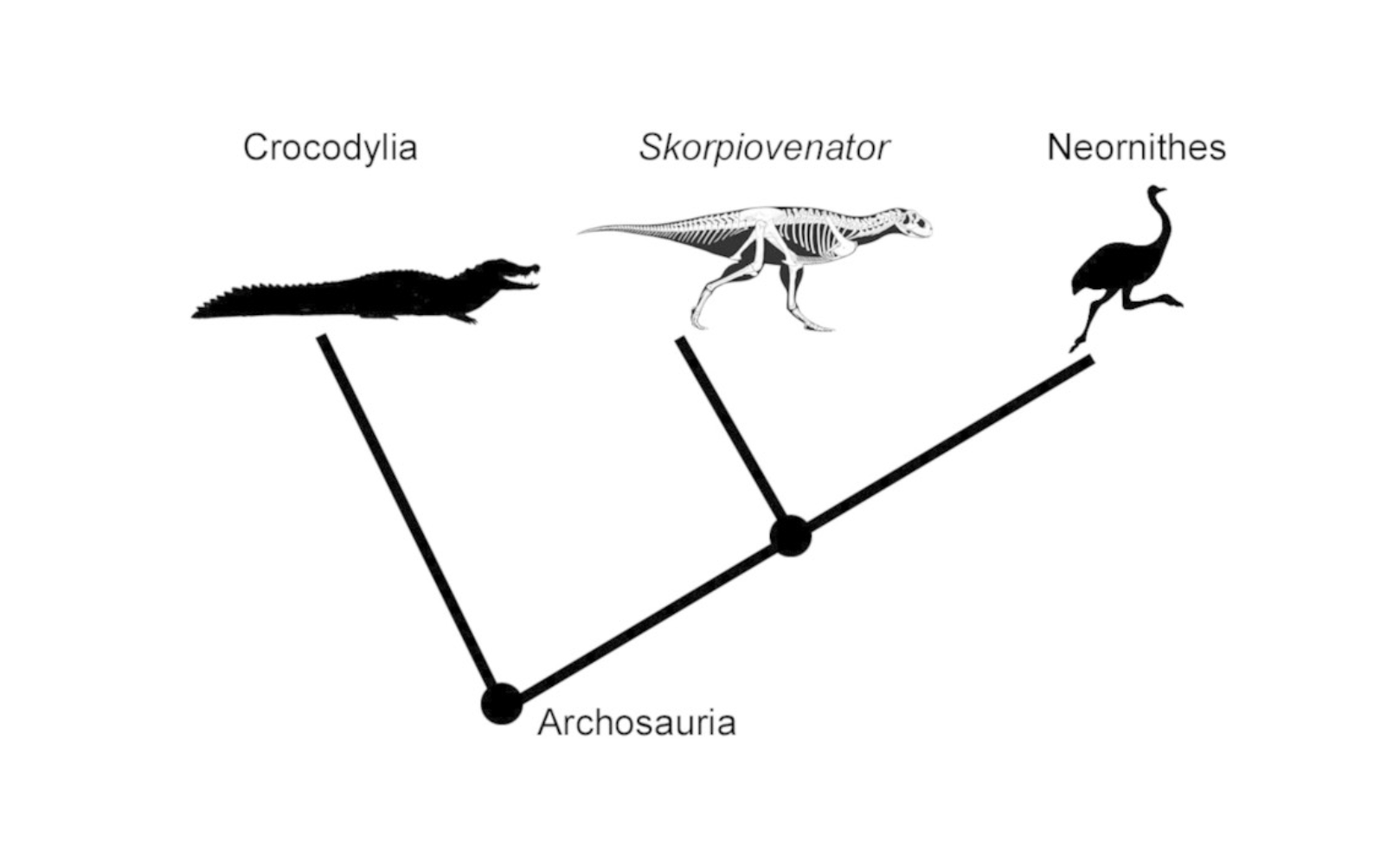
The extant phylogenetic bracket, used to infer an unknown character state (in this case, of a dinosaur Skorpiovenator) based on the character states in birds and crocodiles
Now, scientists engage in this sort of reasoning all the time (see Currie 2021). To give another example, paleontologists have tried to reconstruct the features of the urbilaterian— the last common ancestor of the bilaterians— based on the distribution of character states on a tree. They have to use a tree, because the urbilaterian is erased— it left no fossils at all, including trace fossils (tracks or wiggles in the sediment). It’s also lost, even though there are bilaterians everywhere. (Hell, you are one!) So, faced with an animal that is lost and erased, scientists can use phylogenetic comparative methods to reconstruct what it might have looked like— the urbilaterian: lost and found.
Grafting, then, includes the attempt to reconstruct character states using a phylogeny. But that isn’t all. It also includes the strategies scientists use to locate taxa on trees— to classify them, as opposed to using a classification to make a further inference.
Here, Adrian’s example is the Ediacara fauna. These humble critters are lost. Nothing like them survives in the modern world. So, when it comes time to classify them, scientists have a choice to make. They can either regard them as members of extinct groups— perhaps even high-level groups like classes or phyla— or they can treat them as early members of living groups— as arthropods, mollusks, and so forth: primitive, yes, but not outside the fold.
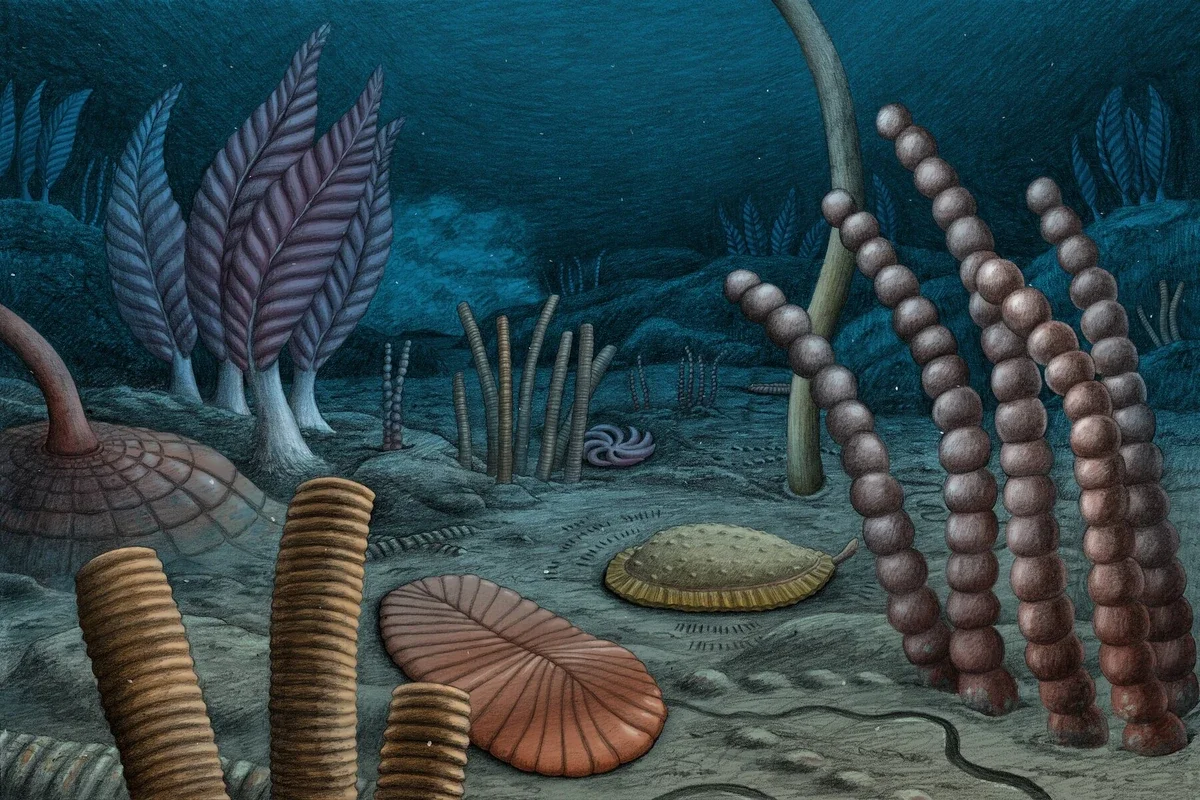
A reconstruction of the Ediacaran seafloor (art by Alex Boersma)
That is how things once looked, anyway. Today it’s recognized that a third option had been overlooked. Namely, you can treat “lost” taxa as members of the lineages that led to modern groups, which branched before the last common ancestor of the living members of the group had evolved. These are “stem groups,” they house a diverse bestiary of forms, including some famous paleontological enigmas. The Ediacaran organism Charnia, for example, is now seen as a stem-eumetazoan— as a member of the lineage that led to eumetazoans, which branched before the last common ancestor of the living eumetazoans had evolved. (Eumetazoans are all the animals more derived than sponges, assuming sponges are the basal animal group.) Likewise, Kimberella is now seen as a bilaterian, and perhaps even as stem-mollusk.*
[* This is where the imagery of “grafting” comes from, by the way. A number of taxa, once phylogenetically adrift, have since been placed on the stems of living groups. They have thus been “grafted” onto the evolutionary tree, resolving the puzzle of their phylogenetic placement.]
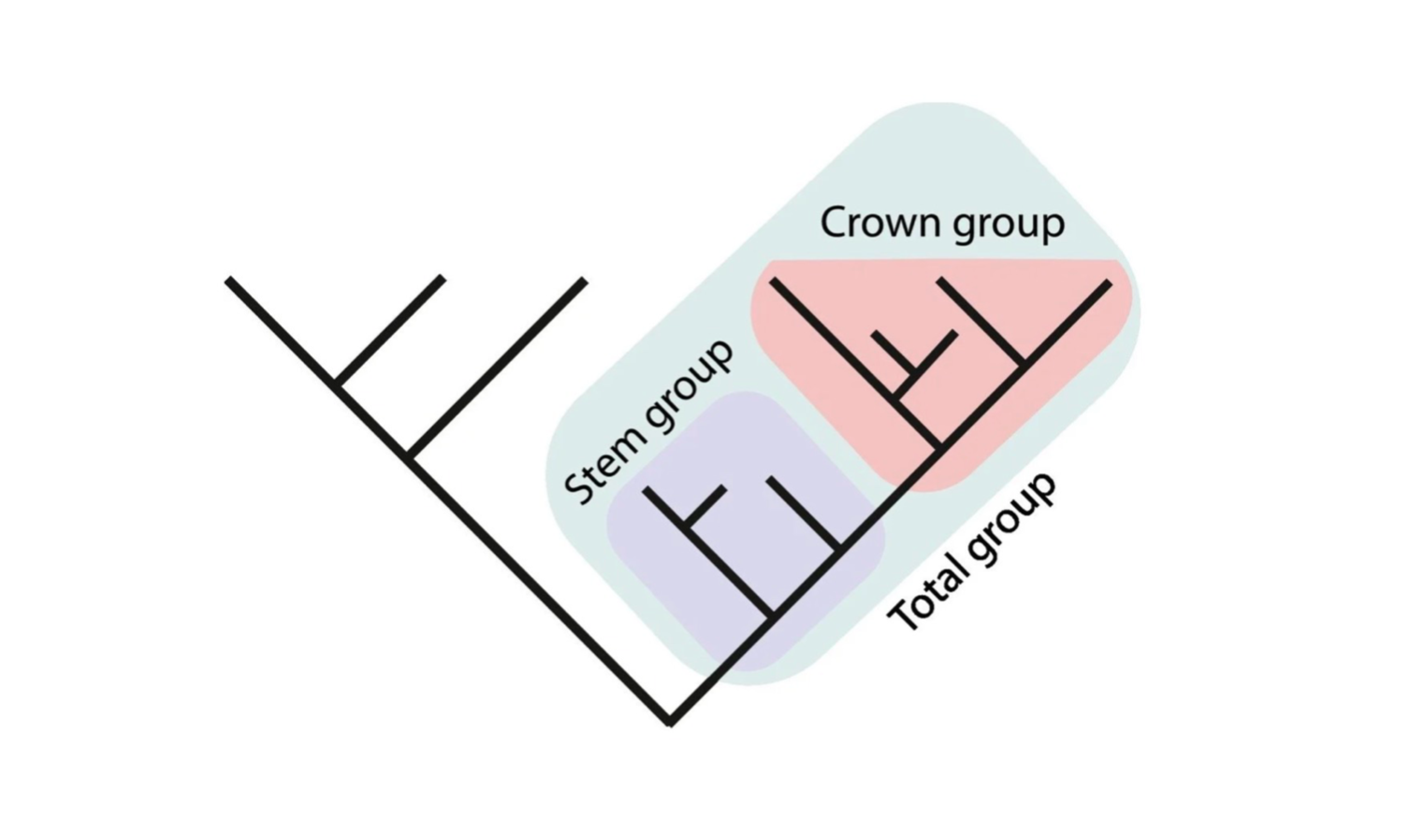
The stem, crown and total groups, represented
Now, there’s clearly a sense in which phylogenetic inference resembles methods like the extant phylogenetic bracket. Still, it has to be said that the practice of “grafting” fossils onto stems is pretty different than the practice of reconstructing the urbilaterian using a phylogeny. The stem-group case is about constraining the phylogenetic affinities of a taxon— where does that taxon fit on the tree of life? The urbilaterian case is about constraining the features of a taxon— what traits or character states did it likely possess? Not the smallest difference is that the latter case presupposes the existence of a reliable phylogeny. But in the case of the Ediacarans, no such phylogeny is available. So by all means “graft” these organisms onto stems— but which stems, and why? That is the question of Ediacaran classification, and it’s a different sort of question than “what did the urbilaterian look like” or “could dinosaurs feel pain?”
One of my memories from the Dorset retreat is that I spent a lot of time bitching about grafting. The bad news, Adrian, is that I’m still bitching about it. (Sorry!) The good news is that I finally understand why. Unlike artificing and anchoring, grafting is a mishmash of practices, which includes both comparative thinking using a phylogeny and the strategies scientists use to construct phylogenies. These do not cohere in their aim, unless characterized at an exceedingly high level of abstraction. So while it may be true that grafting involves “linking [a] lost target to something in the present via lines of causal ancestry,” this description doesn’t really explain how grafting works. It describes an outcome of grafting, without saying how grafting addresses a particular problem generated by loss. And this makes “grafting” a somewhat unhappy explanatory category.
* * *
The final point I wish to raise is related to this thought. Like many practice-oriented philosophers, Adrian takes himself to be engaged in a project of (philosophical, as opposed to scientific) explanation. He’s not trying to contextualize science within a broader field of activity. Instead, he wants to show how science works when it is working well, and in particular, how scientists beat long odds in warranting claims about the past. His aim, in other words, is to demystify science for an audience consisting mostly of non-scientists.*
[* The last is an important point. Adrian is not speaking to scientists with the aim of improving scientific practice. He is speaking to philosophers and other eccentrics (possibly including scientists) to explain how science works.]
But how to explain science? The goal suggests no particular approach, and enjoins no mode of abstraction. Formal methods provide one tack (think Bayesian epistemology), quasi-formal modes another (“Imagine theory T supported by evidence E…”). Yet practice-oriented philosophers tend to favor verbal descriptions of scientific practice, served with a helping of analytic machinery. “Loss,” “erasure,” “strategic perspectivalism”— these are just some of the analytic resources that Adrian introduces, and for the most part they are well-considered and useful.
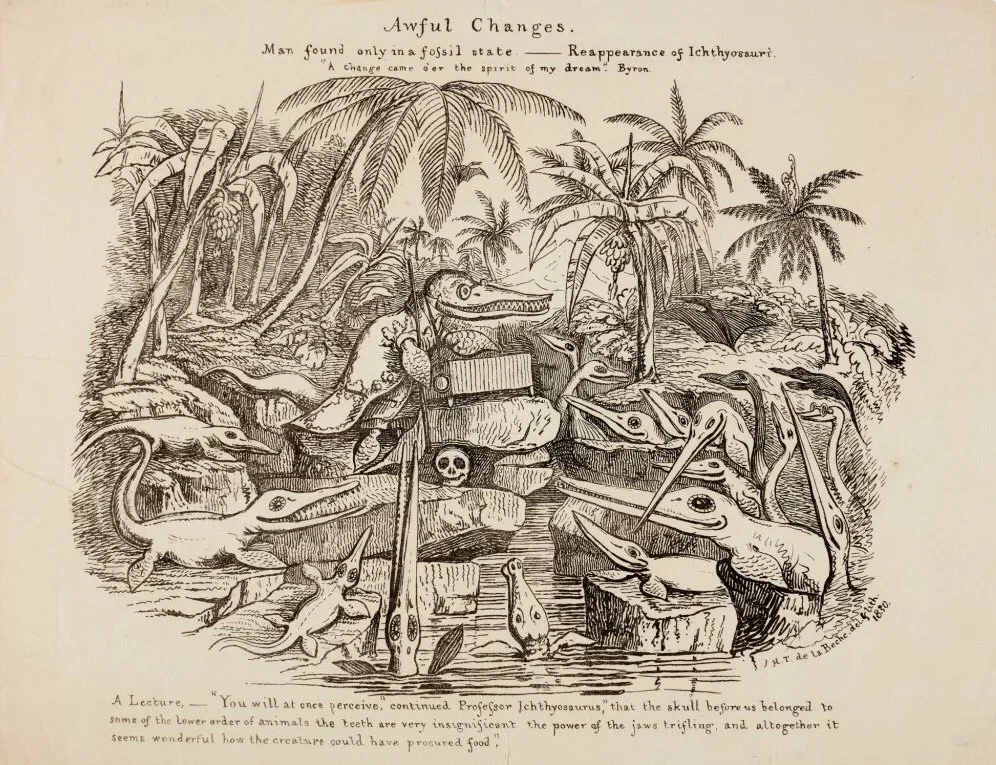
“Awful Changes,” Henry De la Beche’s cartoon mocking Lyell’s Principles, and the inspiration for Professor Ichthy
I mean this to be non-controversial. Most practice-oriented philosophers see their work this way, as consisting of verbal descriptions (often packaged as case studies), and more analytic bits, which might include broad concepts (like “exploratory experimentation”), stimulative definitions (“I take a ‘past world’ to be…”), or bits of formal machinery (like game theoretic representations of scientific agents). Crucially, the work of analysis is often the work of re-description. We redescribe an experiment as “exploratory,” say, noting how its features instantiate the features of exploratory experimentation. Or we describe the extant phylogenetic bracket as “grafting,” and note how it instantiates features of that ideal kind.
I’ve always been fascinated by Adrian’s use of redescription (1) because he’s very good at it, and (2) because I’m not. To be more specific, I’m interested in his use of abstract redescriptions, which he offers (in this book, for one) as explanations of how science works on a fairly general level. Artificing, anchoring, grafting— these are characterizations of scientific practice meant to illuminate how scientists reconstruct lost worlds. If they succeed, they do so because they accurately reflect what scientists are doing, but not on the workaday level of routine methods and procedures. Instead, they capture epistemic strategies instantiated by many methods and procedures, and oriented by a goal that no scientist is likely to have explicitly formulated— to reconstruct “lost” worlds in a particular, technical sense.*
[* They also perform a simplifying function. The reader doesn’t have to keep in mind how phylogenetic inference and the extant phylogenetic bracket work in order to understand how scientists reconstruct lost worlds. They just need to remember that, sometimes, scientists handle lost objects by seeking continuities with present historical individuals. This is less informative than a full description of how phylogenetic inference and bracketing produce knowledge. But it may be a better explanation, since explanations have to be intelligible to their audiences.]
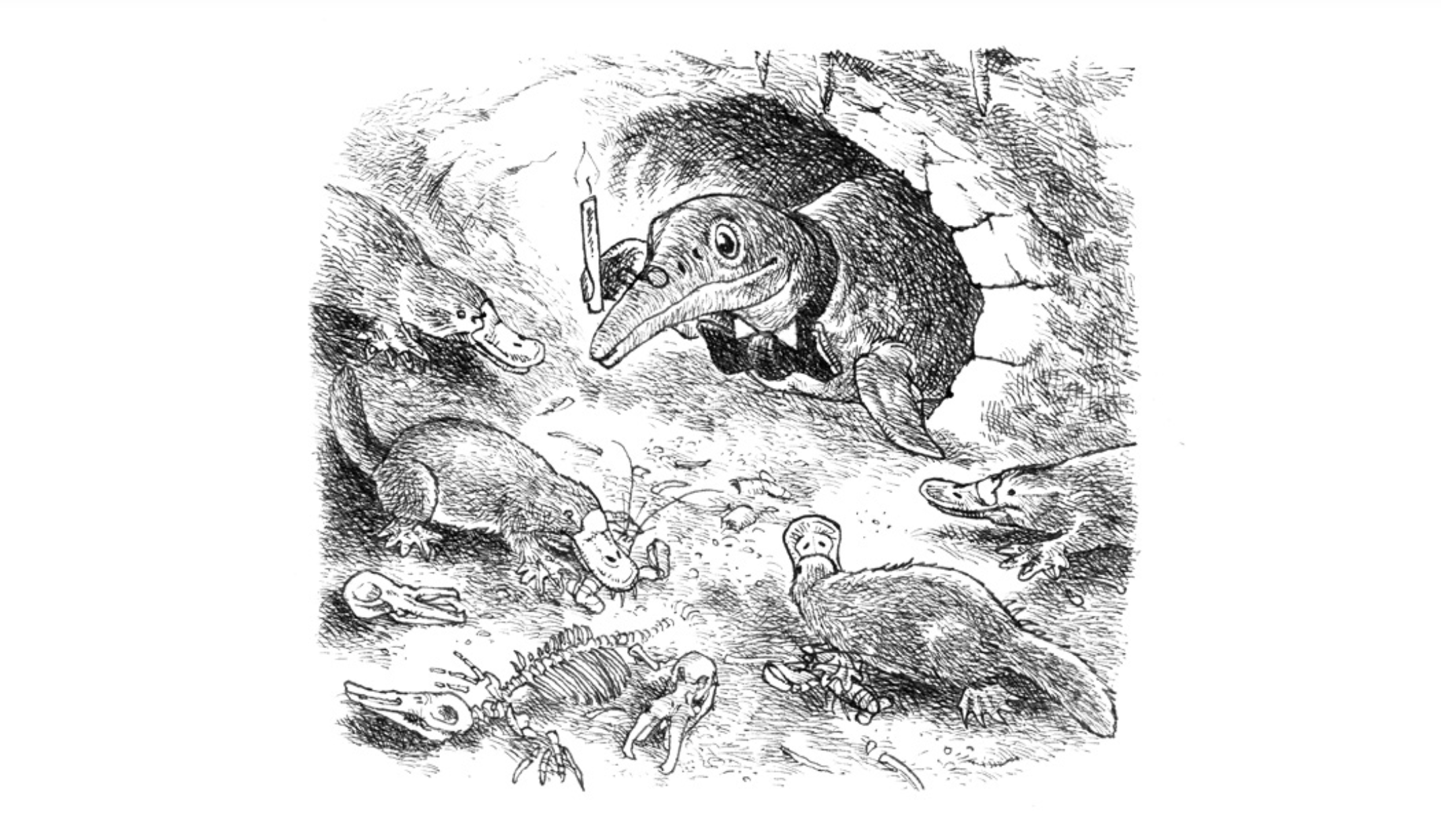
Another great paleoart tribute featuring Professor Ichthy
To close, I want to reflect on the strengths and weaknesses of this strategy, because it has both. Regarding its strengths— it is interesting, creative, often illuminating and sometimes challenging. I have certainly benefited from wrestling with “grafting.” —Wait, what the hell is grafting, again? Oh, I get it. But, like, that doesn’t have anything to do with “causal trajectories,” does it? Ope, no— I see it. Alright Adrian... I wouldn’t have described things that way, but I appreciate that you did.
Regarding its weaknesses, it is usually idiosyncratic, sometimes superficial and occasionally opaque. The only way I can understand grafting is by reminding myself that it means “comparative reasoning + phylogenetic inference using the stem-group concept + some other stuff”— and I wonder what less sophisticated readers will make of it. (Pauses. Adjusts monocle. Submits entry to New Yorker cartoon caption contest.) But maybe this doesn’t matter. These readers will understand “grafting” as Adrian presents it, as a coherent epistemic strategy based on narrativity. However, in this case— as distinct from the cases of artificing and anchoring— I think abstraction gets in the way of understanding. Grafting, for Adrian, is a coherent strategy described in very abstract terms. My worry is that the level of abstraction is too high; that described in less abstract terms it is not a single response to loss, but several, which tackle orthogonal problems.
Still, ambition commends the book. Adrian did not set out to explain, as I once did, how scientists address the problem of Ediacaran affinities. His goal was to explain how scientists reconstruct lost worlds in all their torn, spattery otherness. The scale of the project tilted toward abstraction, even if it didn’t strictly require it. So to Adrian I say: well done, friend. I enjoyed your book, and admired it too. It’s creative, expansive, fun— everything we’ve come to expect. No one else could have written it, and certainly none would’ve written it in the way you wrote it. What more can we ask from a piece of scholarship?
ReferenceS
Currie, A. M. 2018. Rock, Bone and Ruin: An Optimist’s Guide to the Historical Sciences. MIT Press.
Currie, A. M. 2021. Comparative Thinking in Biology. Cambridge Elements Series.
Currie, A. M. 2026. The Science of Lost Worlds. BSPS Open.