• Home
  • Thoughts
  • News
  • Meditations
  • About Us
  • Archive
  • Contact Us
Menu

Extinct

The Philosophy of Palaeontology Blog
  • Home
  • Thoughts
  • News
  • Meditations
  • About Us
  • Archive
  • Contact Us

Ships that pass in the Night

September 10, 2023

Today is Stephen Jay Gould's birthday. Were he still alive, he would be eighty-two years old. As it happened, he died in 2002 when he was only sixty.

As if to commemorate this occasion, a paper appeared yesterday in Nature Communications (“Bayesian Analyses Indicate Bivalves did not Drive the Downfall of Brachiopods Following the Permian-Triassic Mass Extinction”). In a nutshell, it is a Bayesian analysis of diversification dynamics in brachiopods and bivalves, using data from the Paleobiology Database. Here is how the authors describe the study:

First, we estimate the origination and extinction rates, and diversity of the post-Cambrian brachiopods and bivalves using fossil occurrence data from the Paleobiology Database (PBDB). This analysis shows the long-term pattern of their diversification history and highlights the importance of the Permian–Jurassic interval in assessing the brachiopod-bivalve switch. We then exhaustively revise the taxonomy and stratigraphy of the global fossil record of Permian–Jurassic brachiopods and bivalves and use these bespoke datasets to examine the dynamics of the brachiopod-bivalve switch at high temporal resolution, with emphasis on differences between ecological guilds and geographical regions. Finally, we use a multivariate birth-death model (PyRateMBD38) to evaluate the potential factors driving the extinction and recovery of brachiopods and bivalves across the [Permian-Triassic mass extinction]. (Guo et al. 2023, 1)

What does this have to do with Gould? In 1980, Gould and C. Bradford Calloway published an article called, “Clams and Brachiopods—Ships that Pass in the Night.” The allusion is to Longfellow, who wrote of “Ships that pass in the night, and speak each other in passing; Only a signal shown and a distant voice in the darkness.” What Gould and Calloway tried to show was that clams and brachiopods spoke to each other only in passing; that in spite of the fact that brachiopod decline roughly tracked bivalve diversification, the case for competitive displacement was thin. Instead, the “supposed replacement of clams and brachiopods” was produced by a single event, the Permian-Triassic mass extinction, “which affected brachiopods profoundly and clams relatively little” (Gould and Calloway 1980, 383). From this they concluded that “passive extrapolation of microevolutionary theory into the vastness of geological time [often leads] paleontologist astray.” Although competitive interaction “may rule in local populations,” differential response to mass extinction “[sets] the relative histories of large groups through geological time. Similarly, adaptive superiority and design cannot have much to do with the macroevolutionary success of clams.”

Gould and Calloway’s argument was influential but hardly decisive. As Guo et al. report, “the decline of brachiopods after the PTME has [subsequently] been attributed to intense predation, decreased ability to expand habitat distribution, or increased energy flux”(Guo et al. 2023, 2). All these scenarios imply the competitive replacement of brachiopods by bivalves. But the new analysis favors the Gould/Calloway scenario. As the authors write: “Insight from a multivariate birth-death model shows that the extinction of major brachiopod clades during the PTME set the stage for the brachiopod-bivalve switch, with differential responses to high ocean temperatures post-extinction further facilitating their displacement by bivalves. Our study strengthens evidence that brachiopods and bivalves were not competitors over macroevolutionary time scales, with extinction events and environmental stresses shaping their divergent fates” (Guo et al. 2023, 1).

“So on the ocean of life we pass and speak one another; Only a look and a voice, then darkness again and a silence.” Happy birthday, Gould.
In Max Dresow

A golden spike for the Anthropocene

July 12, 2023

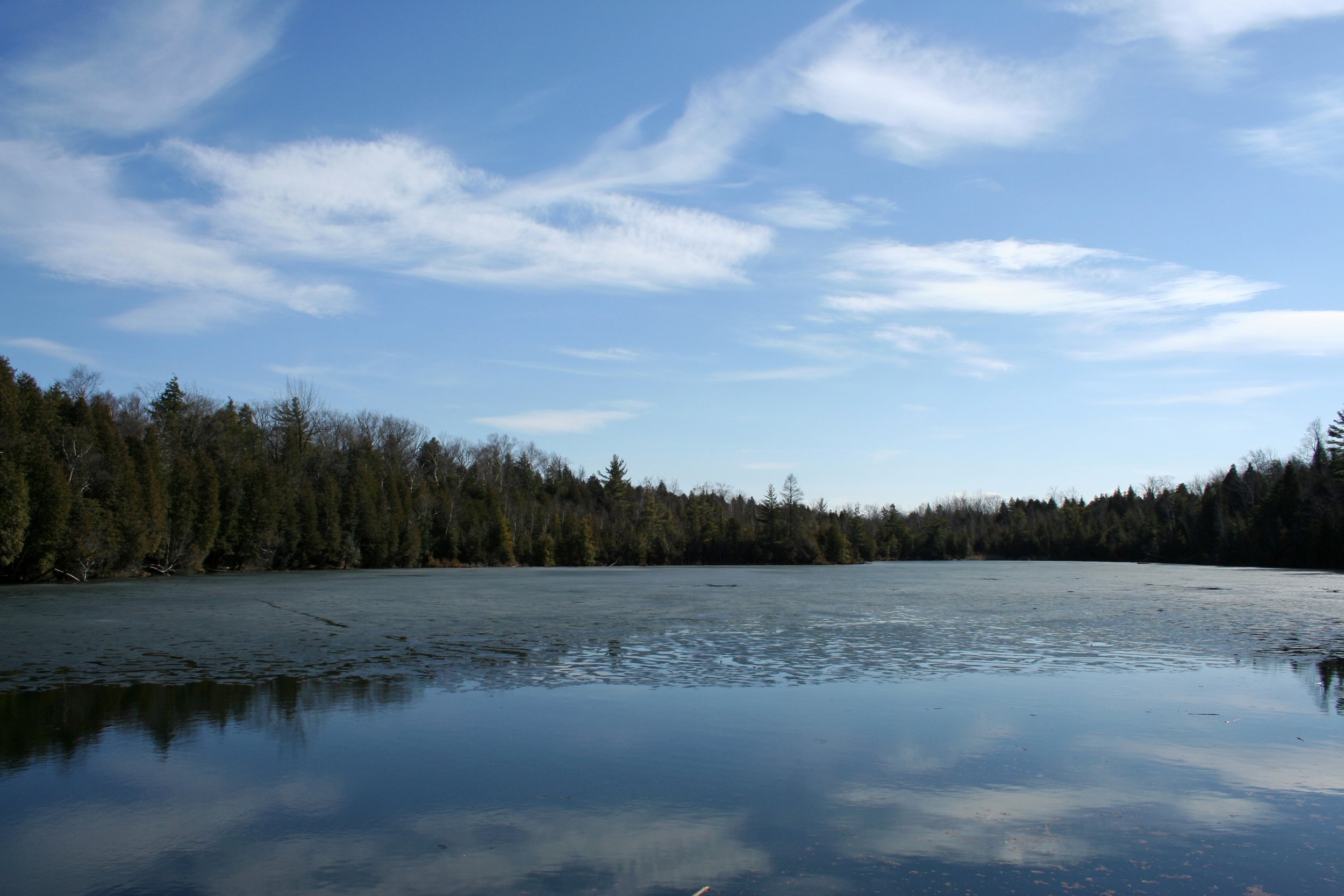
Yesterday, the Anthropocene Working Group proposed that the “golden spike” for the Anthropocene should be symbolically driven into a sediment core extracted from Crawford Lake in Ontario. A “golden spike” is a point in the stratigraphic column that serves as the official marker for the start of a time period, in this case, the proposed (but not yet ratified) Anthropocene epoch. The Anthropocene has been controversial, for reasons previously debated on this very blog. I find myself in sympathy with what Jacquelyn Gill recently told a reporter from Nature:

The work to define an age of human impacts has taken “a tremendous amount of effort, to solve a problem that I don’t think exists” … “We all already know what we mean when we say the Anthropocene.”

Still, others maintain that the ratification of the Anthropocene is a matter of political importance, and moreover, that failure to ratify it might have undesirable political consequences. (See the linked article from friend of the blog Hernán Bobadilla.)

More on this to come… [Update: here]

In Max Dresow

A very problematic problematic fossil

June 12, 2023

Problematic fossils were once a major problem in (especially invertebrate) paleontology. It was the kind of problem for which conferences were convened and edited volumes organized. One such volume, edited by Alberto Simonetta and Simon Conway Morris, begins thus:

Problematical taxa are one of the most intriguing, and most ignored, of the problems in biology. The tendency to relegate them to the sidelines of enquiry, and the dustbin of classification, is understandable, but such treatment threatens to remove an area of great interest to evolutionary biology.

In short, problematica were really quite problematic, and the problems they raised struck many as important ones.

The volume I just quoted from appeared in 1991, at the high point of paleontological distress about problematic fossils. Since then, things have cooled off considerably. The reason is that many problematica have found a home in the stems of living groups: a solution that splits the difference between the old solutions of (1) erecting a new high-level taxon to accommodate the aberrant form, or (2) “shoehorning” the fossil into a living taxon (meaning a crown group). Doug Erwin summarized the new attitude at the recent MBL-ASU History of Biology Seminar. Once a source of great difficulties, the outstanding Cambrian problematica are now the sort of thing you “give graduate students [to figure out].” In Kuhnian language, problematica have shifted from being anomalies to being mere puzzles.

There is one major exception to this trend, however, and that is the Tully monster. A comical animal with stalked eyes and a long proboscis, fossils of Tullimonstrum gregarium are known only from the Upper Carboniferous Francis Creek Shale of Illinois. Yet here they exist in great abundance. The first fossils of the Tully monster were discovered in 1966. Since then, the animal has been compared to a gastropod, conodont, polychaete, nemertean, and nectocarid, to name a few groups. It has also, more recently, been assigned to the vertebrates: a placement that seemed to receive a decisive confirmation with the recent report of a notochord, along with “cartilaginous arcualia, gill pouches, articulations within the proboscis, and multiple tooth rows adjacent to the mouth” (McCoy et al. 2016, 496). (These features conspired to place Tullimonstrum on the lamprey stem, based on an analysis of over 1,200 specimens.)

But recent work by a team of Japanese paleontologists casts doubt on this identification. This team, led by Tomoyuki Mikami of the National Museum of Nature and Science in Tsukuba, performed high-resolution 3D scans of more than 150 Tully monster specimens, along with x-ray micro-computed tomographic analysis of the stylets (mouthparts). What this revealed was that several features previously interpreted as signs of vertebrate ancestry are not comparable to those in vertebrates. These include the Tully monster’s tri-lobed brain, tectal cartilages, and fin rays. More damaging, Mikami and colleagues showed that Tullimonstrum’s body segmentation differs from that the vertebrate pattern in extending from the preoptic head region to the tail. In their words, “no known vertebrate lineage has ever shown a preoptic segmented structure contiguous with somatic segmentation” (Mikami et al. 2023, 5). This suggests that “[the] body segmentation of Tullimonstrum probably reflects a non-sclerotized, possibly internal structure,” consistent with the interpretation that the Tully monster is either a non-vertebrate chordate or a protostome.

A specimen, scan, and interpretive drawing of Tullimonstrum (from Mikami et al. 2023)

Just what was Tullimonstrum? That remains to be definitively established. In the meantime, it is a fine thing that this creature has kept its secret through a half-century of research, now powered by x-ray tubes and particle accelerators, and pursued by scientists all over the world.

In Max Dresow

Give and take

March 20, 2023

We’ve talked before about the importance of comparative reasoning in anatomical reconstruction. (Please read “Problematica”!) Well, it just so happens that there have been some splendid examples in the news lately.

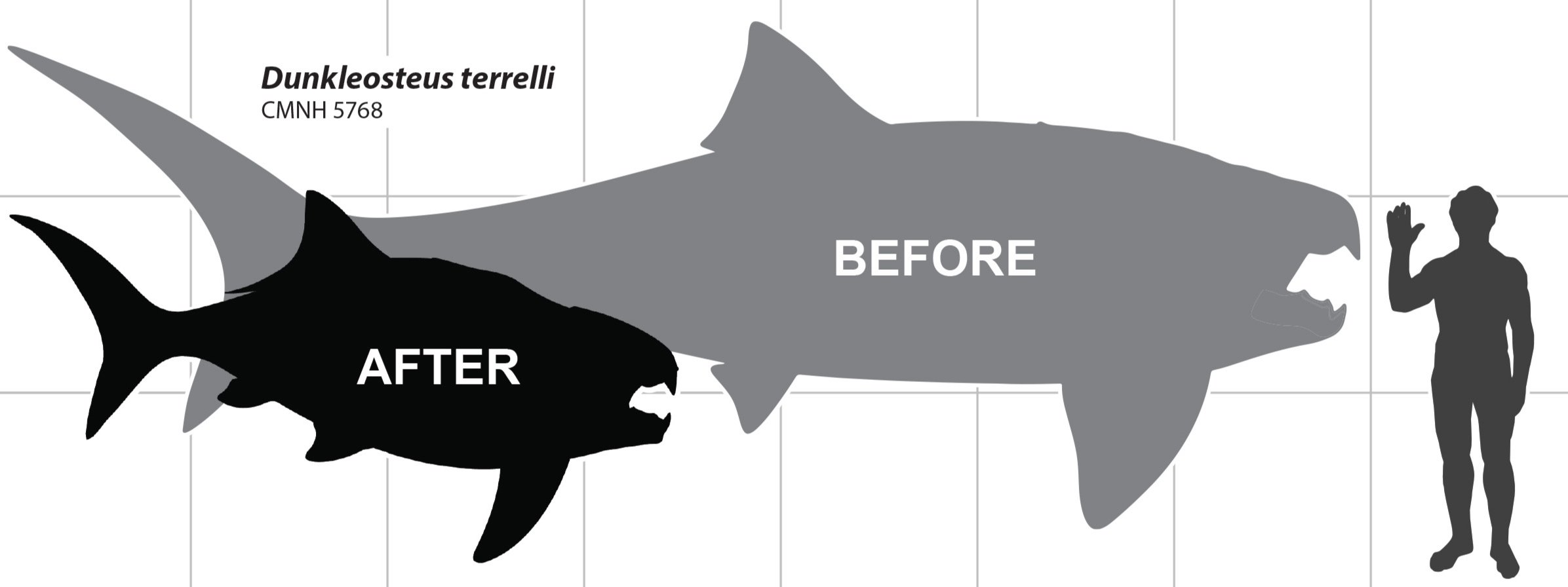
The first comes from the journal Diversity, where Russell Engelman of Case Western University just chopped Dunkleosteus in half relative to previous estimates of maximum body length. Dunkleosteus, if you don’t know, is an armored placoderm hailing from the Late Devonian. It has, I submit, the ugliest mug of any fish in the fossil record. (For real. Check this thing out.) Previous best guesses placed its maximum length around 5–10 meters, with most estimates settling near the upper end of that range. But according to Engleman, this is too high. His claim is based on a new proxy for body size: orbit-opercular length, which corresponds to the distance between the anterior margin of the eye socket and the posterior margin of the head. The measure fulfills three desiderata for a body length proxy for Dunkleosteus: (1) it accurately measures body length across fishes in general, (2) it is measurable on arthrodire* fossils, and (3) it accurately predicts body length in complete arthrodire specimens. (Arthrodira is the group that includes Dunkleosteus.)

The results of Engleman’s analysis are most vividly expressed in the graphical abstract reproduced above. If you prefer it in writing: large arthrodires like Dunkleosteus “were much smaller than previously thought,” with the largest known individuals probably reaching lengths of no more than ~4.1 meters (13.5 feet). Moreover, “[the] length estimate for Dunkleosteus… result in an animal with a very deep and wide body relative to its total length.” (#Chunkleosteus) This body type is consistent with other arthrodires whose proportions can be more directly figured, but even still Dunkleosteus is an “extremely girthy” outlier. Nothing like it exists in the present oceans, although lungfish, coelacanths, and tuna provide the closest living analogs.

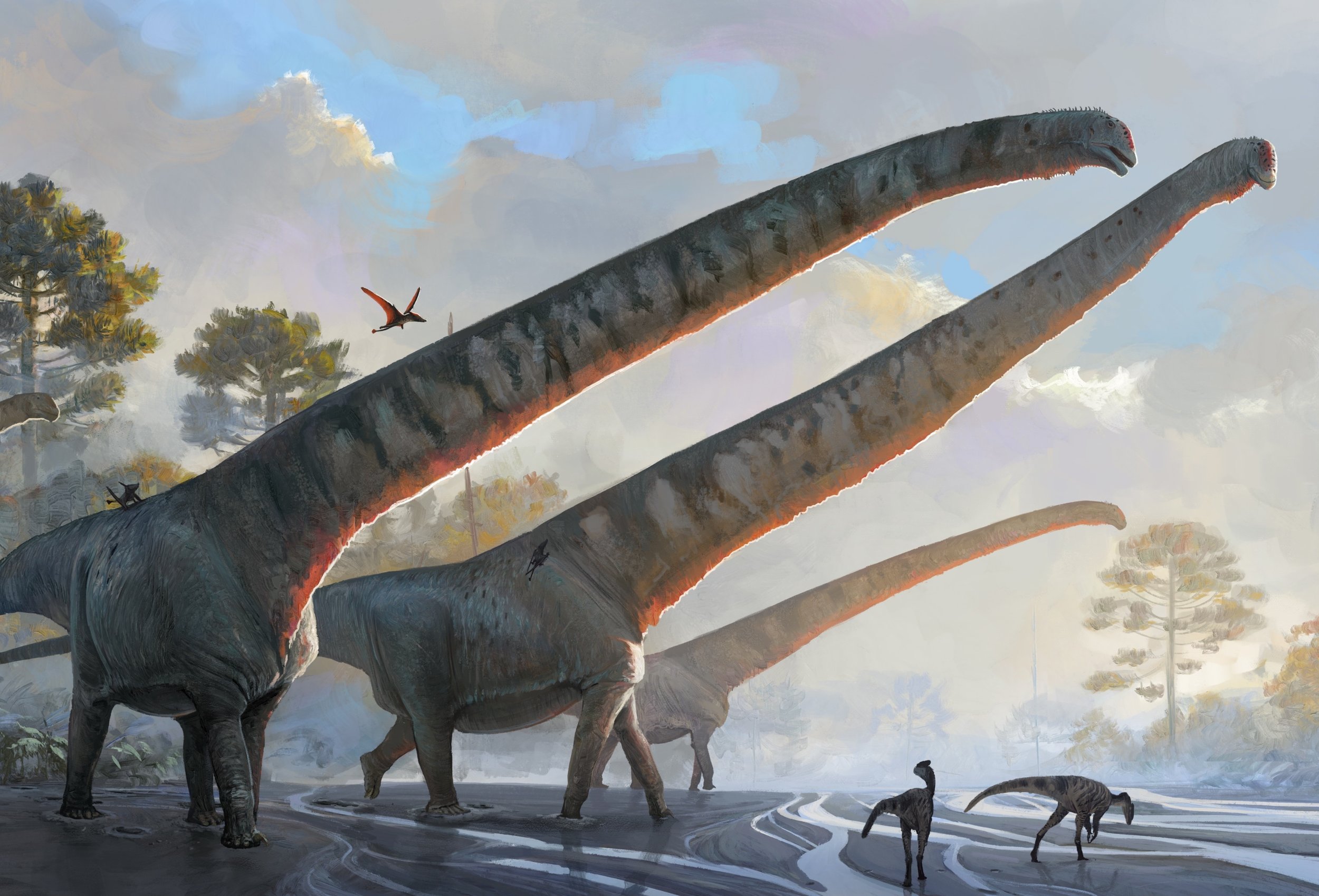
At this point you might be justifiably upset that reanalysis tends only to diminish the size of iconic paleontological monsters. (This is the third example of this phenomenon I have discussed, in addition to the two in this installment of “Problematica.”) But happily, a reanalysis of the sauropod Mamenchisaurus sinocanadorum demonstrates the expansive power of the practice. M. sinocanadorum is known from a single specimen, and this a highly incomplete one. Yet fortunately for researchers, the probable sister taxon of M. sinocanadorum provides a useful model for estimating the length of its neck.

Life reconstruction of M. sinocanadorum. Credit: Júlia d’Oliveira

Here’s where things get fun. The sister taxon, Xinjiangtitan, has the longest preserved neck of any known vertebrate, measuring just under 13.5 meters (about 44 feet). For comparison, that’s about the length of an adult male humpback whale. But based on “functional centrum length measurements” (which measure the distance between the two points at which a centrum articulates with an adjacent centrum), researchers were able to derive a simple scaling factor that puts the M. sinocanadorum neck at 14.4 meters! When they further adjusted the figure to factor in allometry, this jumped to 15.1 meters (nearly 50 feet), which they describe as a “conservative” estimate. As Jack Tamisiea* observes, “This would account for roughly half of its estimated total body length and is equivalent to just over eight giraffe necks stacked end-to-end.”

[* Jack Tamisiea has you covered. Here is his story on Dunkleosteus.]

Reanalysis is not simply an exercise in diminution, then. The Lord giveth and the Lord taketh away: and so it goes with paleontology.

In Max Dresow

Treasure trove from the Early Triassic

February 17, 2023

How did life respond to Earth’s greatest mass extinction? This is the subject of a new study in Science.

First some background. It has long seemed that the Early Triassic was a relatively boring time in the history of life, dominated by those “weedy” species that made it through the end-Permian catastrophe. A popular model of ecosystem recovery imagined a gradual refilling of the trophic “bucket,” beginning with the lowest levels and proceeding to higher and higher ones. The matter has remained obscure, though, in virtue of the death of lagerstätten from the earliest Triassic. (Lagerstätten provide privileged windows into the structure of past ecosystems. So, the dearth of lagerstätten from the earliest Triassic makes it difficult to assess the extent of trophic diversity during the first three million years of this period.)

But ask and you shall receive—or at least that’s how it seems to work in the rocks of South China. Back in 2015, paleontologist Xu Dai discovered the oldest Mesozoic lagerstätte in a succession of rocks near Guiyang. It dates to about a million years after the end-Permian extinction, and bursts with fish, shrimp, lobsters, ammonoids, sponges, conodonts and forams. This is a genuine treasure trove, which suggests a more rapid recovery from the end-Permian extinction than has previously been entertained. Maybe it was the case that more occupants of high trophic levels dodged the Permian extinction than we thought. Or maybe important elements of the modern marine fauna radiated quickly, despite inhospitable conditions in the earliest Triassic. At any rate, it seems that notions of a slow and stepwise recovery are no longer adequate. The story of earth’s greatest extinction just got more interesting, again.

For those interested in a quicker read, here’s a write-up from the news team at Nature (also, sadly, paywalled).

In Max Dresow

Oily blobs from the underworld

February 5, 2023

How many nails must be pounded into a coffin before it ceases to spring open? Find out now, in Science Advances!

Defenders of the biogenicity of the ~3.5 Ga Apex chert “microfossils” have been fighting a rearguard action since 2002, when Martin Brasier and colleagues published a damning reanalysis of the specimens and their geological context. These specimens were once thought to be the oldest known fossils in the fossil record. William Schopf, who described the specimens in a celebrated paper, claimed that they occurred in a sedimentary bedded chert, and more spectacularly (since they greatly predate evidence for significant oxygenation) that they may have been related to oxygen-producing cyanobacteria. But Brasier and colleagues showed that the specimens most likely originated in a hydrothermal setting, ruling out a cyanobacterial interpretation. They also showed, for example, that parts of the original specimens were cropped out of the published photographs (and not represented in the accompanying interpretive drawings), all of which led them to conclude that the putative fossils were in fact abiotic structures that formed around recrystallizing mineral grains during a series of hydrothermal events.

I am going to write about the Apex chert sometime, because what I have related is only the beginning of the story. But from my extreme outsider’s perspective, it seems that Brasier and friends gained the upper hand in 2002 and never relinquished it. (Martin Brasier died tragically in 2014, when a severely overtired man fell asleep at the wheel and collided with Brasier’s car. It is an extremely sad story, not least because it is impossible to read about the circumstances of the accident and not feel sorry for the man who caused the crash.) Anyway, this new publication is the latest chapter in the now thirty-year saga of these probably-not-actually-fossils. It argues that the carbon associated with the specimens is not biological in origin. But it also raises a question: where did the organic molecules in the chert come from? One possibility is from a reaction between water and rocks, an intriguing suggestion that nonetheless does not exclude the possibility that life existed during this time.

For the full story, follow the link above to the open-access article. A more accessible write-up can be found here.

In Max Dresow

A "Neo-Gouldian" argument for evolutionary contingency

January 31, 2023

The route from acceptance to publication is BJPS is a long one. As a result, there are many papers that are in the queue, waiting to be assigned an issue.

One that is nearing the front of the queue is this contribution from T.Y. William Wong, called “The Neo-Gouldian Argument for Evolutionary Contingency.” It is happy timing, since it was recently announced that the next MBL-ASU History of Biology Seminar will be called “Replaying Life’s Tape: Historical Contingency in the Life Sciences.”

Very roughly, the paper seeks to update Gould’s arguments about the contingency of life’s history in light of recent studies of Cambrian disparity and the selectivity of mass extinctions. I should say that this description is based entirely on the abstract: I haven’t had a chance to read the paper yet. But it seems likely to be interesting to readers of this blog.

In Max Dresow

Sexual jousting

January 17, 2023

This just in from PNAS: sexual combat in the Devonian!

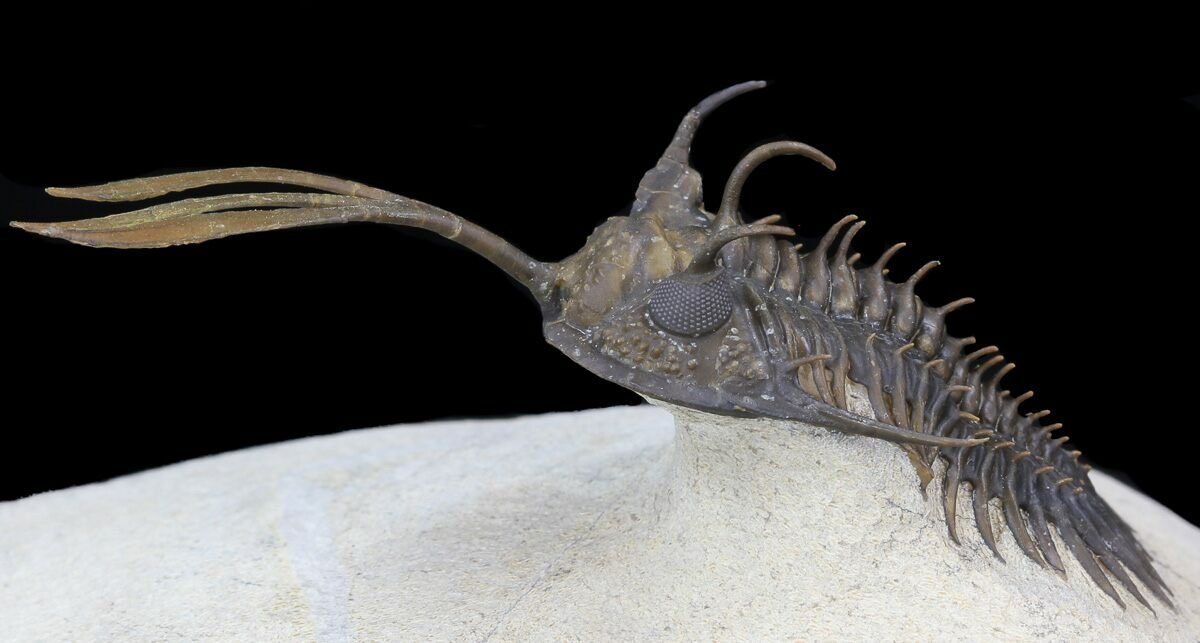
In a new study, Alan Gishlick and Richard Fortey examine a genus of trilobites with trident structures protruding from their heads. They argue that the structures evolved for sexual jousting, which was big with trilobites back in the Devonian. Their key piece of evidence is a specimen that grew to maturity with a severely lopsided trident. This, the authors claim, is inconsistent with other functional interpretations of the structure. If the trilobite used the trident for feeding, it most likely wouldn’t have been able to reach maturity with a seriously deformed one. The same goes for defense. By contrast, animals often make it to sexual maturity with malformed “dueling equipment.” Here the authors enlist support from studies of mule deer and Rocky Mountain elk. Excellent.

For those who can’t get past the paywall, there is a nice write-up in the New York Times.

In Max Dresow

Sinosauropteryx turns 25, sort of

January 12, 2023

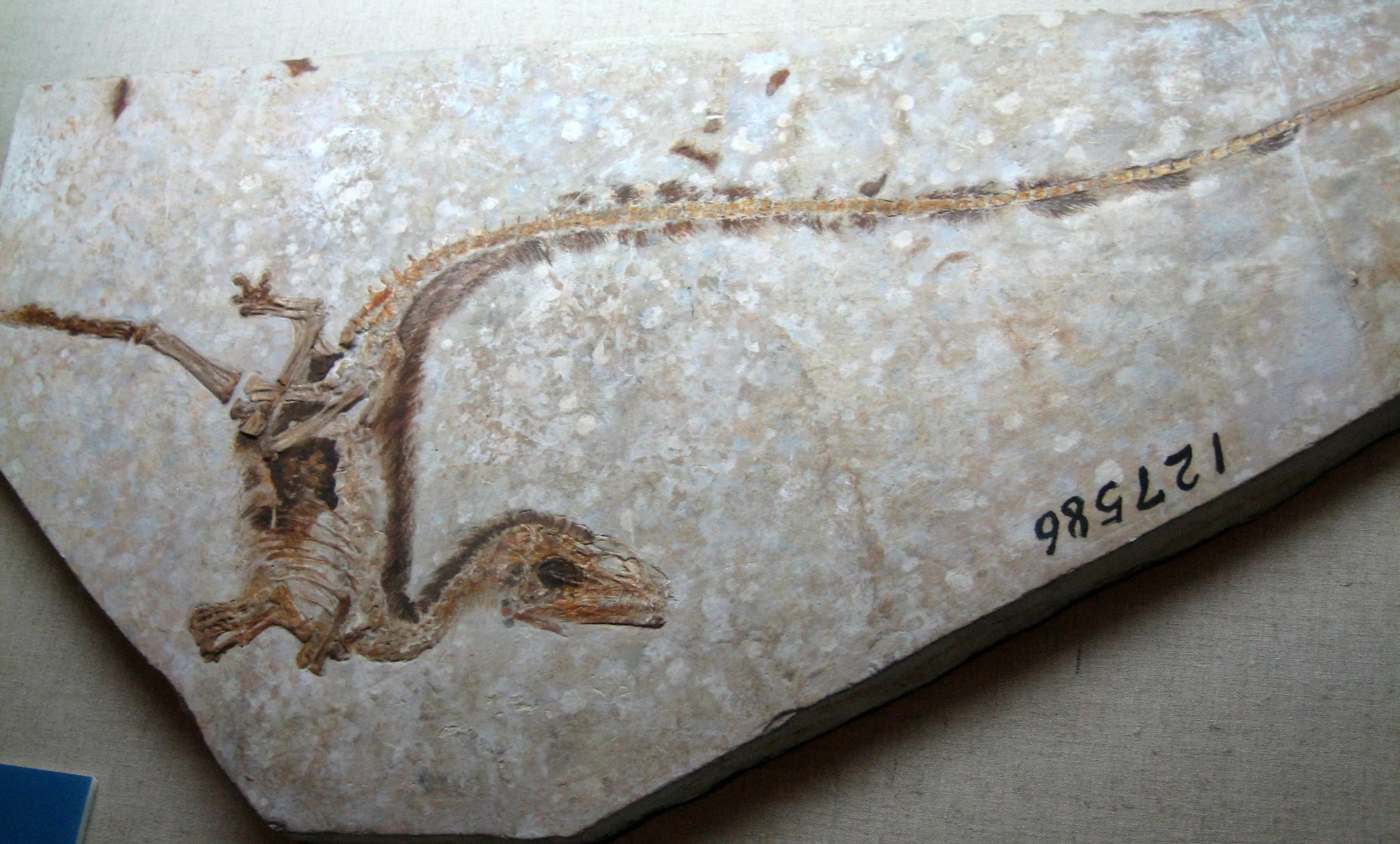
Earlier this week marked the 25th anniversary of this paper, which announced the discovery of Sinosauropteryx prima by Pei-ji Chen and colleagues. Sinosauropteryx was the first feathered dinosaur to be described in a scientific paper. (Or, if you’re a stickler for precision, it was the first non-avian dinosaur with a feather-like body covering to be described in a scientific paper.) So put on your party hats and read the commemorative piece by Kevin Padian if you can get past the paywall…

In Max Dresow

A sunburn for Gorgon

January 10, 2023

Breaking news from the latest Permian…

The end-Permian mass extinction, apart from being the largest extinction event in history, is one of the earth sciences’ greatest whodunits. Once thought to be a consequence of plate tectonic movement, it is now widely held that the main driver of the extinction was the magmatic event associated with the Siberian Traps large igneous province (but see this study from a couple years ago for an interesting wrinkle).

Now there’s this, from Science Advances; namely, “[in]direct evidence” of elevated UV radiation at the Permo-Triassic (P/Tr) boundary in Tibet. The evidence comes from pollen grains, which show a spike in the prevalence of ultraviolet absorbing compounds near the P/Tr boundary. This, in the words of the abstract, “suggest[s] a close temporal link between large-scale volcanic eruptions, global carbon and mercury cycle perturbations, and ozone layer depletion.” And this in turn supplies another potential cause of the environmental deterioration implicated in the land extinctions.

The article is open access, so you can read the whole thing by following the link, above.

In Max Dresow

A new addition to the stem bird aviary

January 9, 2023

An interesting article just appeared in Nature Ecology & Evolution. Here’s the short version. Researchers found a stem bird (a bird occupying an intermediate position in the phylogenetic tree between the oldest bird, Archaeopteryx, and the “true birds”) that helps bridge a large morphological gap in the fossil record. There’s a surface-level irony here given that Archaeopteryx is the OG intermediate form or “missing link.” But whenever you close a morphological gap you also create two new ones…

Anyway, the newly described bird, Cratonavis, is a mosaic of avian and non-avian characters, combining a relatively bird-like body with a more classically theropod-like skull. Don’t believe the news reports describing it as “bizarre”: I’m not even sure you could call it “unexpected.” Still, it is an interesting addition to a rapidly-filling aviary of stem birds. (Here’s a link to a non-technical write-up for anyone blocked by the paywall.)

In Max Dresow
← Newer Posts

Recent News

Featured
Just big me (or, questioning the "big five")
October 25, 2026
Just big me (or, questioning the "big five")
October 25, 2026
Read more →
October 25, 2026
Charles Lyell and the "Author of Nature"
August 12, 2026
Charles Lyell and the "Author of Nature"
August 12, 2026
Read more →
August 12, 2026
Gould-768x420.jpg.webp
November 12, 2025
Max’s New Gould paper
November 12, 2025
Read more →
November 12, 2025
Max's new Cambrian paper
August 25, 2025
Max's new Cambrian paper
August 25, 2025
Read more →
August 25, 2025
2c265bd59d7e600a6a52315b3406c311.jpg
August 19, 2025
Max's new Ediacaran paper
August 19, 2025
Read more →
August 19, 2025
OMG OMG OMG
August 12, 2025
OMG OMG OMG
August 12, 2025
Read more →
August 12, 2025
minnesota-morton-gneiss-750x422.jpg
May 20, 2025
Naw, F**k That
May 20, 2025
Read more →
May 20, 2025
Not as Alien as it Looks
May 15, 2025
Not as Alien as it Looks
May 15, 2025
Read more →
May 15, 2025
Philosophy and Paleontology Online Talk (April 2)
March 26, 2025
Philosophy and Paleontology Online Talk (April 2)
March 26, 2025
Read more →
March 26, 2025
"Exploding the Big Bang," or revenge of the first antinomy?
December 13, 2024
"Exploding the Big Bang," or revenge of the first antinomy?
December 13, 2024
Read more →
December 13, 2024

Powered by Squarespace